

Author: Harold M. van Es
Organic Inputs and Tillage Differentially Impact Soil Health and Yield in Rice–Wheat Systems in the Eastern Gangetic Plain
Abstract Background The rice (Oryza sativa L.) – wheat (Triticum aestivum L.) rotation is the dominant cropping system of the Indo-Gangetic Plain and is experiencing challenges from a variety of environmental and socio-economic factors. Organic matter cycling and zero-tillage (ZT) have been encouraged in the...
Soil Health-Human Health Nexus: Mineral Thresholds, Interlinkages and Rice System in Jharkhand, India
Abstract Understanding the role of minerals along biological pathways in the food chain (soil-crop-animal/human) is imperative to solving the global problem of human malnutrition and toxic exposure. This is especially relevant to rice (Oryza sativa L.)—a staple crop in highly populated regions, like India, that are...

Enhancing Soil Health in Rice Cultivation: Optimized Zn Application and Crop Residue Management in Calcareous Soils
Abstract Crop residue, a readily available biomass, is the largest source of organic matter in soil, and zinc (Zn) significantly influences microbial activity. Understanding the optimal Zn rates for enhanced biological activity in crop residue-amended soils is crucial. A study at RPCAU, Pusa, examined the...
Seasonal Variations in Soil Characteristics Control Microbial Respiration and Carbon Use Under Tree Plantations in the Middle Gangetic Region
Abstract Seasonal variations directly impact the biochemical and microbial properties of the soil, influence carbon and nutrient cycling within the soil system. Soils under tree plantation (TP) are rich in organic matter and microbial population, making them more susceptible to seasonal variation. We studied the...
A Data-Driven Approach for Devising and Assessing Precision Nitrogen Management Strategies Applied to Wheat Systems in India
Abstract Limiting nitrogen pollution from crop production is essential for mitigating greenhouse gas emissions and protecting aquatic ecosystems while maintaining food security. Precision nitrogen management (PNM) provides a conceptual framework for achieving yield goals while maintaining nitrogen pollution within planetary boundaries by matching fertilizer rates...
Agronomic enhancements in the Indo-Gangetic Plain variably improve soil health depending on tillage and residue management
Abstract Changing climates, labor markets, scarcity of water and soil degradation threaten productivity in rice (Oryza sativa L.) – wheat (Triticum aestivum L.) rotations the eastern Indo-Gangetic Plain (IGP). Diversifying cropping systems, zero tillage, and residue addition can improve soil health and lead to increased system yields....
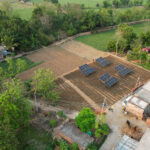
A Multi-Use Agrivoltaics Model for Smallholder Communities
India, like many countries around the world, faces the daunting challenge of increasing food production to feed its growing population while attempting to mitigate the effects of climate change by reducing its greenhouse gas emissions. In this context, agri-photovoltaics (agrivoltaics…
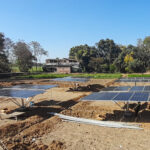
Testing Agrivoltaics with Farmers in Bihar
The increasing global demand for green energy and food necessitates win-win solutions that address these two priorities without undermining each other or causing negative externalities. One potential solution lies in a relatively new technology: agrivoltaics. It enables the co-location of…

Can Agrivoltaics Help Achieve Zero-Hunger, Zero-Carbon Food Systems?
With a rising global population, demand for food and energy is increasing while the world seeks to move away from fossil fuel use. TCI’s Zero-Hunger, Zero-Carbon Food Systems project aims to reduce the climate impacts of food production in Bihar…

Soils and Human Health: Communication Between Geo-Environmental, Socio-Demographic and Lifestyle of Rural Tribal Women of Jharkhand, India and Their Mineral Nutrition
Abstract A holistic view on possible determinants of human health within a poor subsistence farming community is important to addressing pressing issues surrounding hidden hunger. This survey study assesses the mineral nutrition of women in rural tribal communities of Jharkhand, India, and its possible connection...