Counting Savings, Sharing Stories: Food, Farming, and the Hidden Labor of Women
A plate of rice with greens may look simple, or even nutritionally limited, to an outside observer. But spend a morning with women farmers in eastern India and that modest plate begins to tell a deeper story. It reflects rain-dependent agriculture, seasonal crops and the everyday labor that sustains rural households.
In villages across Jharkhand and Chhattisgarh, what appears on plates is closely tied to the work women do. They cultivate vegetables in small plots, gather leafy greens from nearby fields and forests, process grains after harvest, and prepare meals after long days of work both inside and outside the home.
I had come to these villages to better understand rural diets. My initial goal was to explore what families were eating and whether small behavioral nudges might help improve dietary choices. But as conversations unfolded, it became clear that the question was not simply about introducing new foods or changing cropping patterns. What households ate was deeply connected to how food was produced, processed and prepared, and to the labor women invest in sustaining their households and farms.
I began to see this connection while sitting in the courtyard of a village self-help group meeting, watching women count their weekly savings and talk about farms, markets and families.
A morning with the self-help group
The women begin arriving around mid-morning, between ten and eleven. Some come in pairs or small groups along narrow paths between houses and vegetable fields. Others arrive alone, adjusting the edge of a neatly draped sari as they step into the courtyard, faces bright with the anticipation of a social gathering that briefly interrupts otherwise demanding days.
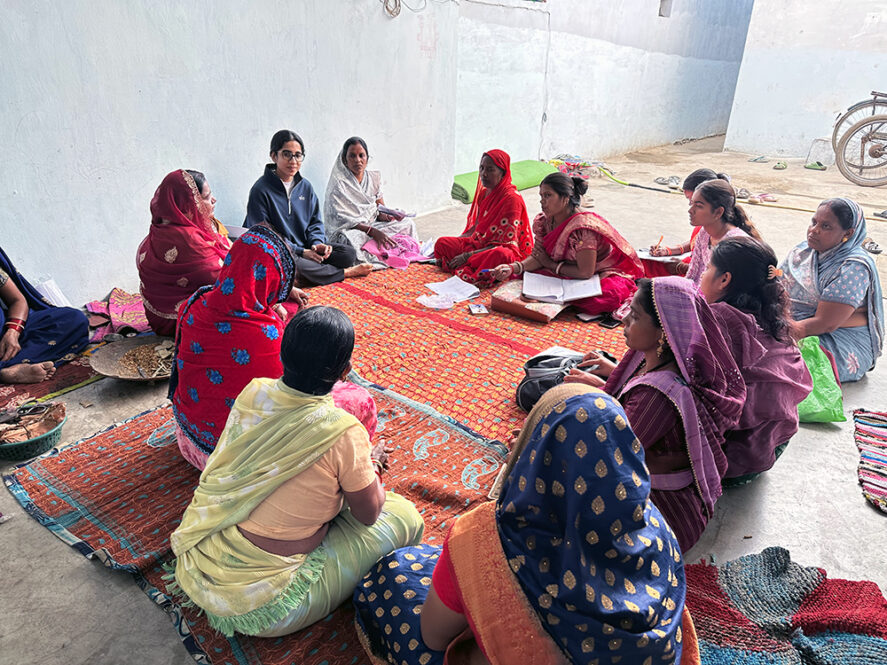
Self-help groups meet on a weekly basis to collect savings and discuss issues like farming practices and household concerns. (Photo by Annie Gurmeher Kaur/TCI)
These are weekly meetings of self-help groups, small collectives of about 10–12 women who pool savings and provide small loans to one another. Across rural India, such groups have become spaces where women manage money, exchange information and support one another in navigating household and livelihood decisions.
The meeting begins with contributions to the group’s savings. Notes are counted, recorded in a ledger and placed into a locked metal box. Once the financial matters are settled, conversation flows more easily.
On many days discussions turn to farming practices, government programs or household concerns. On this particular day, the conversation turns to food.
What stood out in these conversations was not just what the women were eating, but how they were thinking about food. Several women spoke about a “three-color plate”—cereals, vegetables and protein—an idea introduced through local awareness efforts, reflecting how social and behavior change communication is shaping how they think about diets.
The work that keeps farms and households running
Agriculture in these regions is largely rain-dependent, with paddy dominating the calendar in predominantly smallholder farming systems. After the harvest, many fields shift to vegetables grown in small plots near homes, crops that both supplement household diets and provide produce for nearby markets.
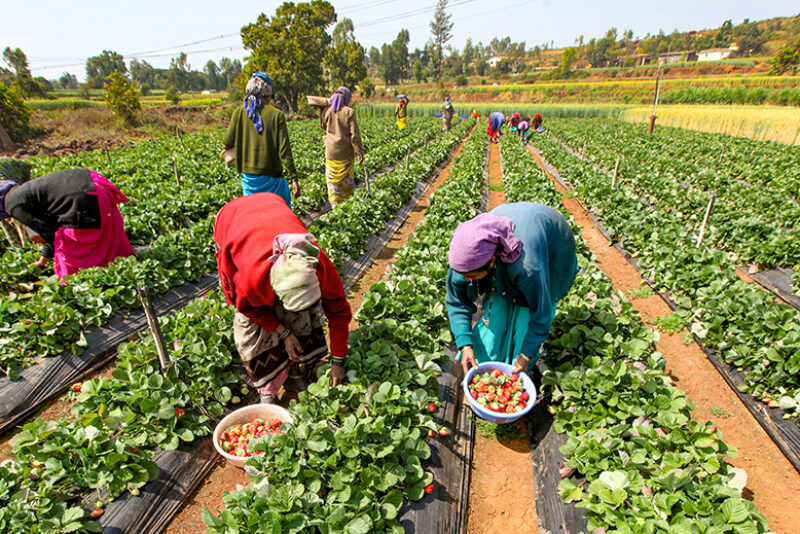
Much of this work is carried out by women. They sow seeds, weed beds, harvest vegetables and prepare produce for sale. When vegetables are ready, it is often women who carry them to markets and negotiate prices with buyers.
One afternoon, I watched a woman pack peanuts into small plastic bags to sell in the local market. Each packet was priced at roughly half of what it would cost in town. When someone suggested increasing the price, she laughed and continued packing. Selling quickly, she explained, mattered more than maximizing profit.
Yet even when women return from markets with cash, they do not always control how that income is spent. The labor of cultivation and marketing often belongs to them, but decisions about how that money is used may still involve husbands or other family members.
Taken together, these overlapping responsibilities reveal the scale of women’s contributions to rural food systems, much of which remains unpaid and largely invisible.
Agricultural work intensifies during the paddy season when the rain arrives. Women describe waking before sunrise to cook meals before heading to the fields for transplanting or harvesting crops. During these periods neighbors help one another complete urgent tasks, sharing labor across fields.
But farming is only one part of women’s daily work. They also cook meals, collect water, gather fuelwood, care for children and elderly relatives, tend livestock, and manage kitchen gardens. Rice processing adds another layer of labor: after harvest, paddy must be soaked, boiled, dried and milled before it becomes the rice that appears on the plate.
Taken together, these overlapping responsibilities reveal the scale of women’s contributions to rural food systems, much of which remains unpaid and largely invisible. These time demands also shape diets. Knowing what is healthy does not always translate into eating it. During already long workdays, simpler, less nutritious meals often become the practical option.
What a typical plate looks like
Meals in these villages revolve around rice accompanied by vegetables, sometimes with lentils or pulses.
During the winter, a wide variety of leafy greens become available. Mustard, amaranth, and other edible plants grow in fields, kitchen gardens and nearby forest edges, often referred to collectively by the women as saag. With greater awareness of their nutritional value, women are more intentionally foraging and including these greens in their diets.
Pulses appear less frequently and depend on seasonal stocks, with most kitchens keeping only one or two varieties such as pigeon pea, horse gram, black gram or green gram.
Some foods are preserved for later use. Leafy greens may be dried, while pulses are sometimes processed into small dumplings, added to curries months later. Another preparation commonly mentioned is fermented rice, made by soaking cooked rice overnight and eating it the next day.
Spending time with these groups reveals how closely rural diets are tied to local agriculture. Rice from rain-fed fields, vegetables from kitchen gardens, greens gathered nearby and pulses stored across seasons all shape what appears on the plate.
Some households also cultivate traditional millets, such as finger millet—locally called madua or padua—used to prepare flatbreads occasionally eaten for breakfast.
Livestock are common in these villages, yet they appear surprisingly infrequently on the everyday plate. When tea is served it is usually black, even in households that own cows, because cattle are primarily kept for ploughing fields and producing manure rather than milk. Goats often serve as a form of savings and are sold when cash is needed, while eggs are frequently left to hatch into chicks instead of being eaten. Meat, therefore, tends to appear at meals only during festivals or special occasions.
Seasonal fruits such as mango, guava or papaya are usually eaten when available from household trees, while purchasing fruit from the market is less common because it is considered expensive.
To an outsider, such meals may appear simple. Yet, they reflect indigenous, endogenous dietary diversity shaped by local crops, seasons and the labor required to produce and prepare food.
The growing presence of packaged snacks
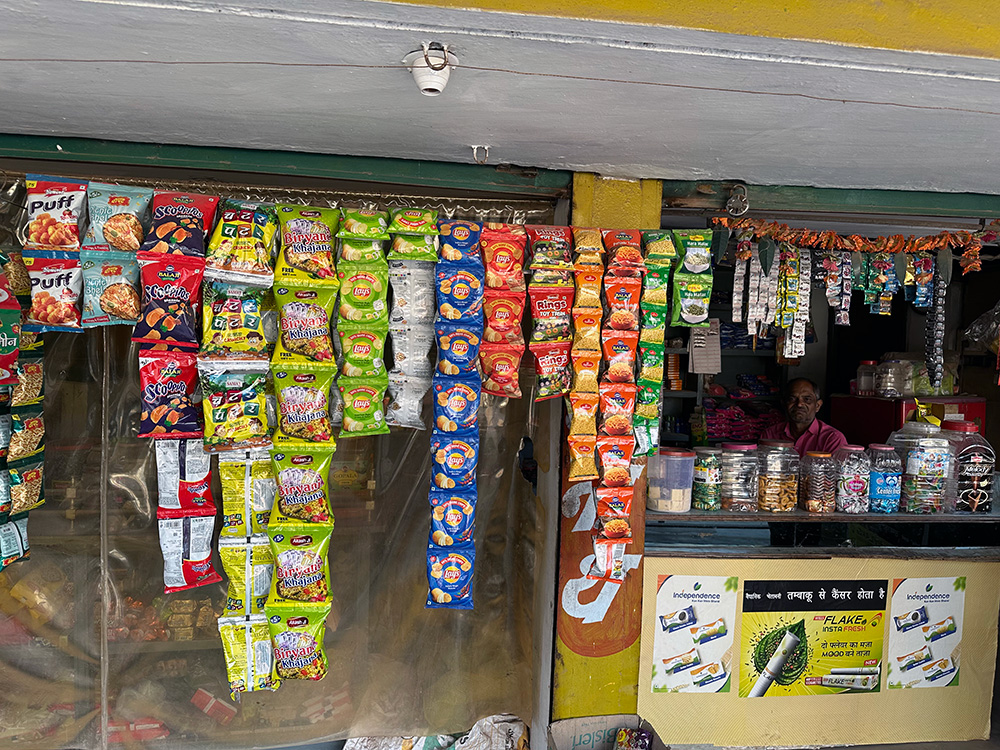
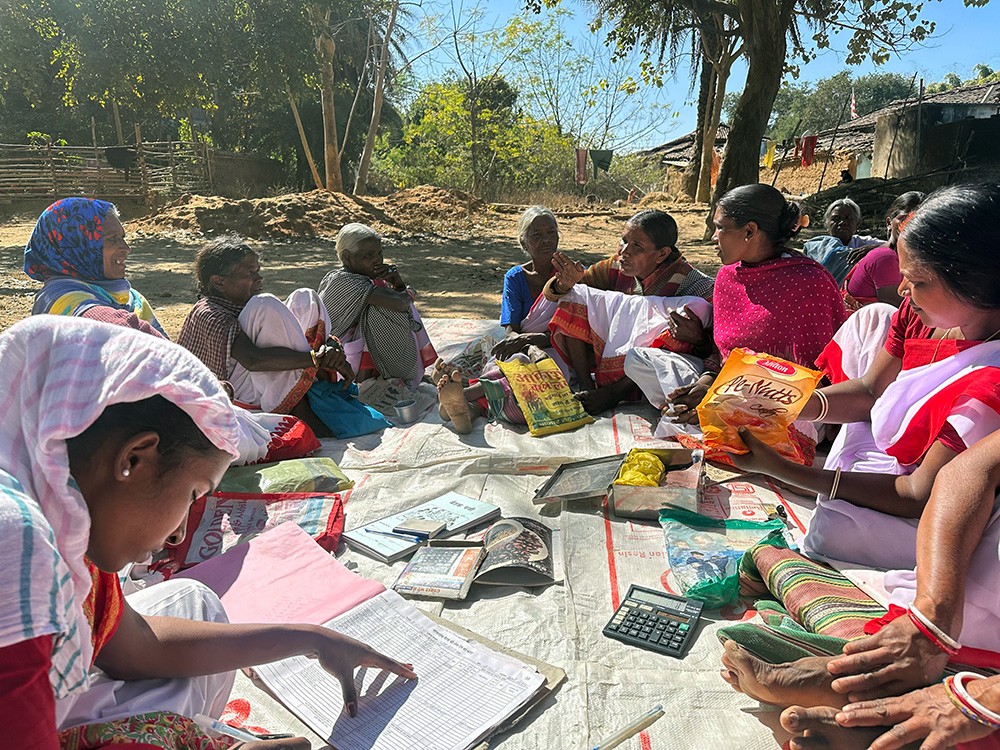
Packaged snack foods are increasingly popular among children and available at shops in remote villages. (Photo by Annie Germeher Kaur/TCI)
Children sometimes accompany their mothers to self-help group meetings, lingering nearby while the discussions continue. In households where food purchases are often made carefully and in small quantities, it was striking to see how easily packaged snacks had entered everyday life. More than once I noticed a child sitting beside the group with a packet of chips in hand.
Even in remote hamlets where little else is sold, small shops stock packaged snacks like chips and biscuits, and these foods have become increasingly popular among children. Many mothers admit it is difficult to discourage them. Some say children prefer the taste, while others point out that preparing additional snacks beyond regular meals is not always possible given the many demands on their time.
The contrast is striking. While everyday meals remain rooted in local crops, seasonal greens, and foods prepared at home, packaged snacks come from far outside the village food system, yet are steadily becoming part of it.
Lessons from the courtyard
As the self-help group meeting comes to an end, smaller conversations begin to fill the courtyard. Some women discuss the week’s farm work while others talk about family matters. Many say they look forward to these gatherings, which offer a rare chance to pause and exchange ideas.
Spending time with these groups reveals how closely rural diets are tied to local agriculture. Rice from rain-fed fields, vegetables from kitchen gardens, greens gathered nearby and pulses stored across seasons all shape what appears on the plate.
Yet behind these meals lies an immense amount of work. Women cultivate crops, gather edible plants, process grains, cook meals, collect water and firewood, and care for their families. The demands of farm work and household responsibilities leave many with little discretionary time of their own, a reality often described as time poverty.
Sitting in that village courtyard, it becomes clear that understanding rural diets requires looking beyond nutrients and food groups to the everyday labor that sustains them. While awareness of healthier diets is growing, acting on it depends on time, resources and decision-making power. Most importantly, dietary diversity here is not imported but produced within the system, with women at the center of this balance, quietly holding rural food systems together.
Annie Gurmeher Kaur is a TCI scholar and an MS-PhD student in the field of applied economics and management.
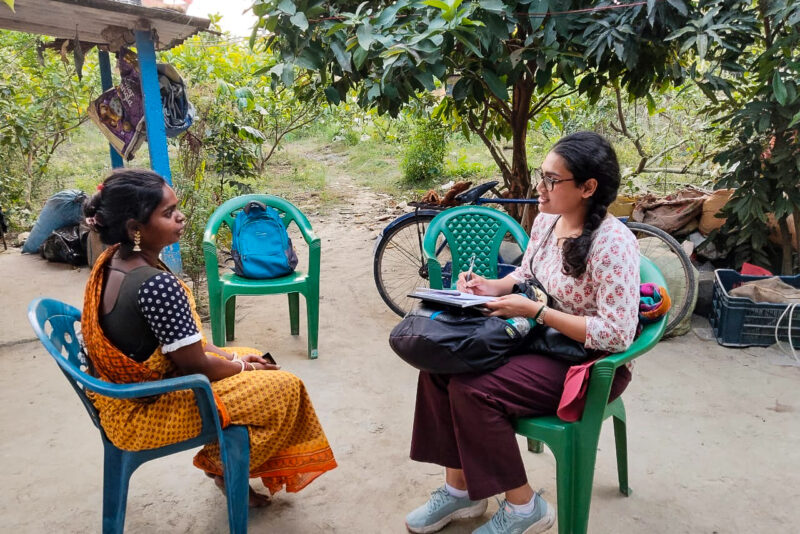
Featured image: Annie Gurmeher Kaur meets with a group of women from a self-help group. (Photo provided)