Study Finds Supermarket Sales Improve Farmers’ Nutrition
A study supported by the Tata-Cornell Institute for Agriculture and Nutrition (TCI) reveals that selling directly to supermarkets yields nutritional dividends for India’s smallholder farmers. Published in the journal Agricultural Economics, the study demonstrates that farm households who sell vegetables directly to supermarkets consume significantly higher amounts of vitamin A and zinc, in addition to eating more diverse diets than those who sell to traditional markets.
“This study shows that integrating smallholders into the direct procurement systems of modern value chains can mitigate the hidden hunger rampant in developing countries,” said Chandra S. Nuthalapati, lead author of the paper and a former visiting professor at TCI. By increasing incomes and incentivizing increased vegetable production, selling to supermarkets helps farmers and their families eat more nutritious diets.”
To discern the impact of direct supermarket sales on farm households’ nutrition, researchers surveyed more than 500 vegetable-growing households in India’s Delhi National Capital region, quizzing the heads of household and their spouses on their food consumption habits and other variables, such as education and spending levels.
After analyzing the survey results, the researchers discovered that households that sell directly to supermarkets consume 44% more vitamin A and 65% more zinc than those that sell through traditional markets. They also found that such households get more protein, iron and zinc from non-cereal sources, meaning they eat more diverse diets.
The income of the farmers selling to supermarkets was nearly 30% higher, suggesting that income gains could play a key role in their households’ improved nutrition consumption. Nuthalapati’s previous research also showed an income gain associated with supermarket sales.
The high standards of supermarkets could also play a role in farm household’s improved nutrition. The researchers found that growers eat some of the vegetables rejected by supermarkets.
Supermarkets have expanded rapidly in developing countries over the past two decades. The introduction of direct procurement from farmers improved farmer incomes and provided stronger incentives to produce high-quality crops, which experts hope will lead to improved diets.
In spite of strong economic growth, malnutrition persists in India, often in the from of “hidden hunger” like micronutrient deficiencies. About 88% of Indians suffer from vitamin A deficiency, while 25% are deficient in zinc. Such ailments can cause health challenges, such as impaired eyesight and increased susceptibility to infections, in addition to impeding cognitive development. More than two thirds of India’s population cannot afford to eat a diet that meets the country’s guidelines, and spending on nutrient-rich is particularly low.
Given the tangible income and nutrition benefits of direct sales to supermarkets, the researchers said that Indian policymakers should strengthen supermarket-led value chains with policies that facilitate private investment and support inclusive participation by smallholder farmers.
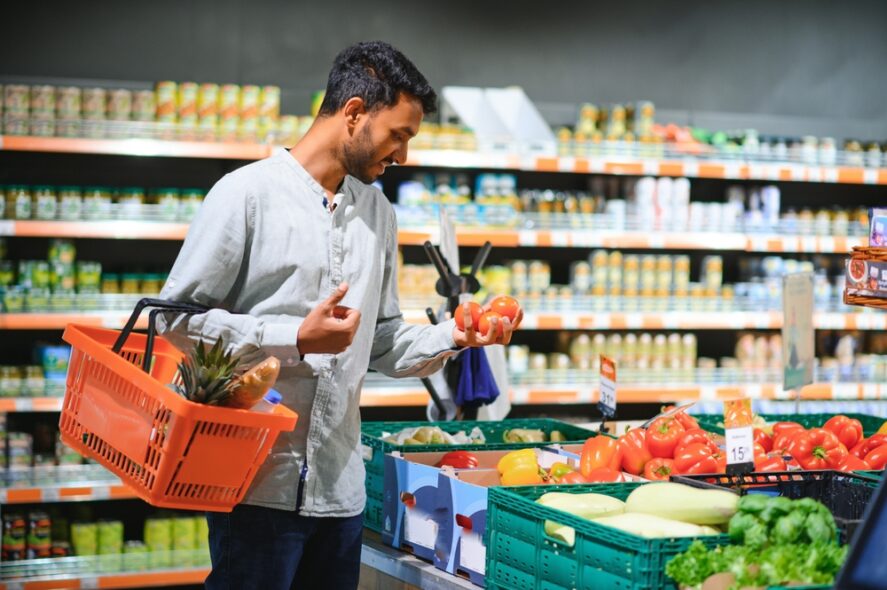
Featured image: A man shops for tomatoes at a supermarket. Research shows that farmers who sell vegetables directly to supermarkets have improved nutritional outcomes. (Photo by Hryshchyshen Serhii/Shutterstock)