

Tag: Chandra S. Nuthalapati
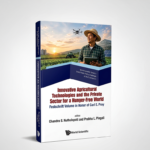
TCI Director Co-Edits New Book on Agricultural Technology
Tata-Cornell Institute for Agriculture and Nutrition (TCI) Director Prabhu Pingali and Chandra S. Nuthalapati, a former visiting professor at TCI, co-edited a new book, “Innovative Agricultural Technologies and the Private Sector for a Hunger-Free World.” The book was published in…

Study Finds Supermarket Sales Improve Farmers’ Nutrition
A study supported by the Tata-Cornell Institute for Agriculture and Nutrition (TCI) reveals that selling directly to supermarkets yields nutritional dividends for India’s smallholder farmers. Published in the journal Agricultural Economics, the study demonstrates that farm households who sell vegetables…
Nutritional Impacts of Direct Selling to Supermarkets: The Case of Farm Households in India
Abstract A growing body of literature examines the developmental impacts of smallholder participation in supermarket value chains in developing countries, yet evidence on the nutritional implications for farm households remains limited. This study investigates how direct sales to supermarkets influence household nutritional outcomes among vegetable...

Can Gene-Edited Crops Revolutionize Agriculture in Developing Countries?
The emergence of gene-editing technologies, particularly CRISPR-Cas9, has ushered in new possibilities for transformative advancements in agriculture, healthcare and environmental sustainability. The discovery of CRISPR-Cas9 in 2012 has the potential to accelerate the pace of innovation and enable more precise…
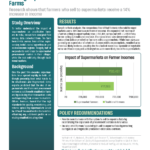
Making Supermarkets Profitable for India’s Small Farms
This policy brief presents the results of a study examining the impact of supermarkets on smallholder farmers in India. Using field survey data collected from 795 farm households across four states representing India’s varied agroclimatic and socioeconomic regions, researchers found that farmers who sold to...

Do Supermarkets Help India’s Small Farmers? It Depends.
When supermarkets first began spreading across India, they brought hope that smallholder farmers could make more money by selling them fresh, high-quality produce. Decades later, has that benefit materialized?
New research from the Tata-Cornell Institute for Agriculture and Nutrition (TCI)…

Determinants and Income Effects of Small Farmers Selling to Supermarkets versus Traditional Market Channels in Four Regions of India
Abstract Read a policy brief based on this study. Using endogenous switching regressions to calculate transitional heterogeneity which we have used to build counterfactual scenarios to identify the treatment effects for both sellers to supermarkets and sellers to traditional markets, the results support neither a...

Indian Millet Cultivation Plagued by Low Yields, Prices, and Profits
Millets contribute to achieving six of the seventeen Sustainable Development Goals for 2030: zero hunger, good health and well-being, decent work and economic growth, responsible consumption and production, climate change, and life on land. In India, the gradual disappearance of…

Accelerating Varietal Turnover in Smallholder Soybean Farms
“A lack of dynamism in varietal change in food crop production represents a wasted opportunity that is potentially high, exacting a heavy toll on poor producers and consumers alike.”
–Thomas S. Walker and Jeffrey Alwang
Crop Improvement, Adoption and Impact…

Demand-Side and Supply-Side Factors for Accelerating Varietal Turnover in Smallholder Soybean Farms
Abstract The rapid growth of soybean cultivation in the world augurs well for achieving SDG2 of promoting sustainable agriculture, ending hunger, achieving food security, and improving nutrition. India started promoting soybean cultivation in the 1970s to combat dietary protein deficiencies and augment smallholders’ incomes. However,...