2025–26 in Review: Food Safety, Water & Sanitation
This article presents a review of TCI research from the 2025–26 academic year related to food safety, water and sanitation. For more TCI research, download the 2025–26 annual report.
Maximizing anti-anemia policies
Anemia—characterized by insufficient healthy red blood cells or hemoglobin—causes impaired cognitive and developmental outcomes, costing the Indian economy roughly 1.3% of gross domestic product (GDP) each year. In 2020, an estimated 67% of Indian children under 5 years were anemic.
Anemia has several causes, including iron or vitamin deficiencies, resulting from poor diets or infections from fecal contamination. TCI research shows that deliberately targeting these pathways through policy can amplify the impact of government efforts. In a study published in the journal Applied Economic Perspectives and Policy, TCI researchers assessed the impact of two government interventions, the nutrition program Anemia Mukt Bharat (Anemia-Free India) and Swachh Bharat Mission (Clean India Mission), a sanitation program intended to eliminate open defecation. According to the study, children who received benefits from both programs had higher blood hemoglobin levels than those who received only one.
According to the study, children who received benefits from both programs had higher blood hemoglobin levels than those who received only one.
The researchers used data from India’s National Family Health Survey (NFHS) to analyze the effects of each program on the hemoglobin levels of children under 3 years. Children who received at least one intervention under Anemia Mukt Bharat had 0.06 g/dl higher hemoglobin levels. Among children who received improved sanitation facilities under the Swachh Bharat Mission and whose communities’ open defecation rates fell below 40 percent, hemoglobin levels were 0.12 g/dl higher than those who were not reached by the intervention. In contrast, hemoglobin levels were 0.08–0.23 g/dl higher in children receiving interventions from both programs.
Hemoglobin levels below 11 g/dL are considered anemic. The researchers estimate that 2,100–6,700 children are 0.08–0.23 g/dL below the 11 g/dL threshold and could be raised out of anemia by receiving interventions from both programs.
The research underscores the importance of how programs are implemented, demonstrating that public health efforts can have the biggest impact if they address health determinants comprehensively, with coordination between all the government ministries involved.
Tackling wasted potential
Each year, about 32% of the food produced across the world is lost or wasted. Tackling food loss and waste has been on the global agenda for decades, with policymakers citing it as a contributing factor to issues like food insecurity and environmental degradation. Despite this attention, food loss and waste remains a challenge across the world.
A 2025 book written by TCI researchers provides an evidence-based framework for addressing food loss and waste as a means to improving access to healthy diets. In “Wasted Potential: Tackling Food Loss and Waste Across Transforming Food Systems,” TCI alumna Jocelyn Boiteau and Director Prabhu Pingali set forth a policy agenda that builds demand for diverse, nutritious foods in order to incentivize reduction of food loss and waste while mitigating trade-offs between food security, environmental sustainability, and socioeconomic welfare. In addition to stimulating demand for safe and nutritious foods, Boiteau and Pingali called for investments in value-adding innovations like processing, packaging, and cold chain infrastructure, as well as public infrastructure and financial services that improve market access.
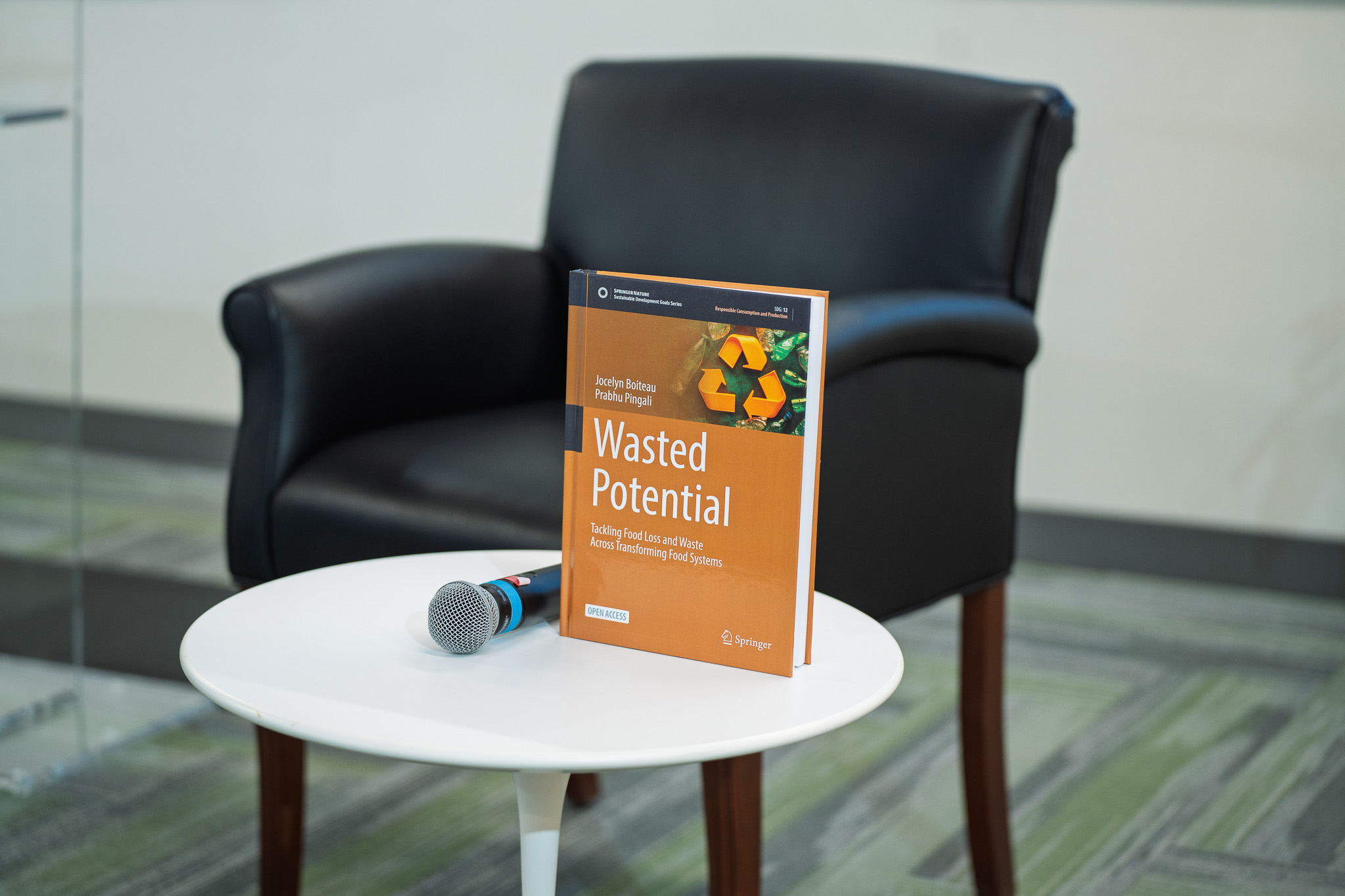
Jocelyn Boiteau and Prabhu Pingali presented Wasted Potential at several book launch events around the United States. (Photo by IFPRI)
Although most previous works on food loss and waste have focused on loss at the retail and consumer levels, Boiteau and Pingali utilized a food systems approach that encompasses the full set of activities along food supply chains. This comprehensive approach enabled them to identify potential trade-offs and synergies with other goals. For example, food packaging can help to reduce the loss of perishable foods and make them more accessible to consumers, but also has a negative environmental impact.
“Wasted Potential” also highlights important issues with the data used to monitor food loss and waste. In particular, the lack of a single, agreed-upon definition for food loss and waste makes it difficult to compare data on both the extent of the issue and the effectiveness of reduction strategies. Boiteau and Pingali also highlighted the need for more robust data collection and the alignment of data collection and estimation approaches with sustainable food systems objectives.
Boiteau and Pingali shared key findings from “Wasted Potential” at a series of book launch events at Cornell University; the Agriculture, Nutrition & Health Academy; and the International Food Policy Research Institute.
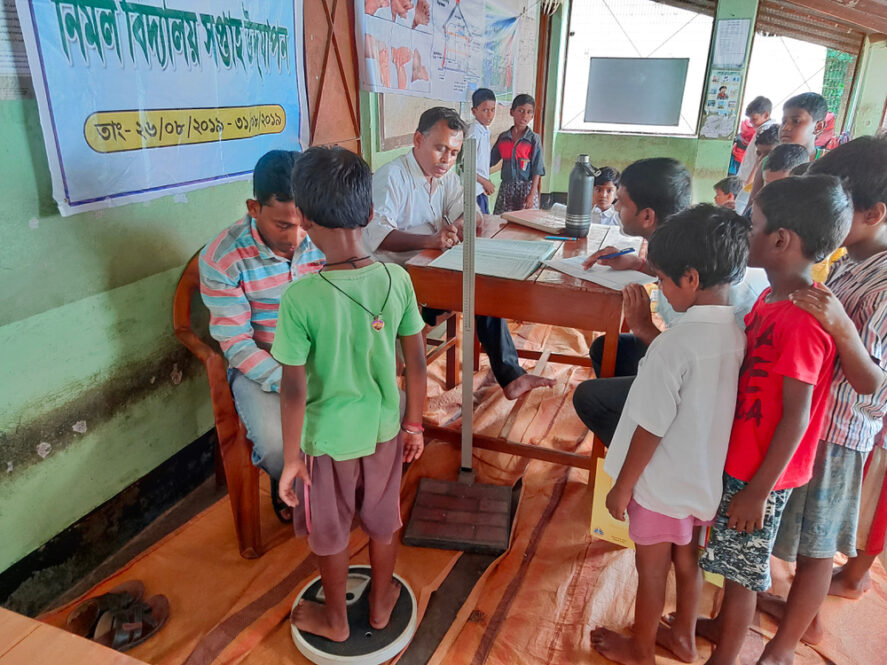
Featured image: Doctors weigh children at a school in West Bengal, India. (Photo by SOMNATH MAHATA/
Shutterstock)