Digital Agriculture Can Improve Food Security and Climate Mitigation
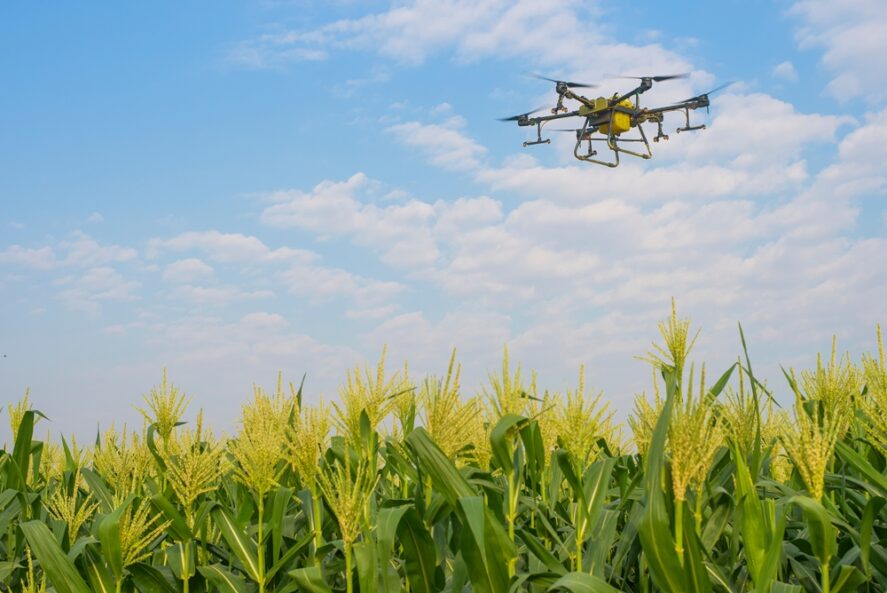
Digital technologies like drones and soil sensors can help farmers adapt to climate change by improving yields and mitigating agriculture’s adverse environmental impacts, but widespread adoption faces several obstacles, according to a new study from the Tata-Cornell Institute for Agriculture and Nutrition (TCI) published in the journal Sustainable Development.
The global digital agriculture industry is expected to grow from $18 billion in 2023 to $29 billion in 2028. While past agricultural technologies aimed primarily to improve yields, digital agriculture tools promise improved resource management and risk mitigation.
The study was led by TCI alumna Vanisha Sharma. Alumni Anna David Thottappilly and Shree Saha also contributed to the study, in addition to TCI Director Prabhu Pingali.
The researchers reviewed 112 scholarly articles on digital agriculture technologies. They selected the articles based on empirical studies conducted throughout the world, with a focus on crop production, harvest and selling. The articles focused on five technological categories: mobile phones, global positioning systems (GPS), sensors, variable rate of application tools, and artificial intelligence (AI) and machine learning.
“The collective body of research on digital agriculture shows that it can mitigate the anticipated consequences of climate change by increasing crop productivity, reducing losses and improving the climate resilience of crops,” Sharma said.
The researchers found that digital technologies can benefit agriculture in two ways: improving yields and reducing the negative environmental effects of crop production.
“The collective body of research on digital agriculture shows that it can mitigate the anticipated consequences of climate change by increasing crop productivity, reducing losses and improving the climate resilience of crops,” Sharma said.
According to the researchers, GPS mapping, soil sensors and variable rate fertilization and irrigation enable farmers to improve their yields by optimizing input applications. However, they cautioned that the evidence supporting these technologies’ usefulness in developing countries is mixed. Farmers can also increase their yields by using drones and other technologies to monitor crops and detect early signs of pests or diseases, reducing potential crop losses.
Aside from yield gains, the researchers also found that digital technologies could help mitigate the environmental impacts associated with agriculture. Precision agriculture techniques using variable rate technology apply inputs like fertilizer more efficiently can reduce related greenhouse gas emissions, the researchers said. It also conserves water and soil through more efficient irrigation.
Despite the advantages of digital agriculture, the researchers found significant challenges impeding its widespread use. On the supply side, the reviewed articles revealed insufficient public and private investment as a barrier to adoption at scale. Low adoption rates also make it difficult for businesses to develop sustainable revenue models for high-cost technologies. The agricultural sectors in many developing countries also lack the capacity and productivity needed to effectively use digital tools, the researchers said.
On the demand side, limited awareness and low literacy rates hinder adoption, as does the limited inclusion of marginalized groups, such as women farmers. The review also showed that misuse of technology is a challenge. For example, farmers could use precision technology incorrectly, resulting in overapplication of fertilizer.
“Overcoming the barriers to adopting digital agriculture is essential to unlocking its dual promise of raising productivity sustainably while strengthening agriculture’s resilience to climate change,” Saha said.
Featured image: A drone flies over farmland. (Photo by Thanakorn.P/Shutterstock)