Alumna Builds on Doctoral Research with New Book on Food Loss and Waste
Most nutritionists are concerned with what foods people are putting into their bodies. Tata-Cornell Institute (TCI) alumna Jocelyn Boiteau is troubled by the food that doesn’t make it there—the fruits and vegetables that wither on the vine, are lost in transport, or are scraped off plates into garbage bins. As a nutrition researcher, she studies food loss and waste as an intermediary problem between production and consumption that ultimately affects the quality of people’s diets.
“I’m happy thinking about food all day,” Boiteau says. “Working in the sustainable food systems space and focusing on how food systems can deliver healthy diets to all is the perfect alignment of both my interests and goals.”
After earning her PhD in international nutrition as a TCI Scholar at Cornell University, Boiteau currently works as the director of nutrition impact and innovation at Food Systems for the Future. Her new book, “Wasted Potential: Tackling Food Loss and Waste Across Transforming Food Systems,” is out now.
“Jocelyn has been very passionate about addressing malnutrition problems in developing countries from her undergraduate days and her experience working with malnourished children in Rajasthan after graduation,” [TCI Director Prabhu] Pingali says.
Boiteau’s interest in nutrition took her from Ithaca to India, but it started at her grandparents’ house, where she spent time in their large hilltop vegetable garden, surrounded by marigolds. Growing up, Boiteau says she was always interested in food, spending countless hours cooking and sharing meals with family and friends. But food wasn’t her only interest. Her family was oriented towards science and engineering, which encouraged her to think about the world and the ways things work. So, when she began applying to colleges, nutrition was an ideal major.
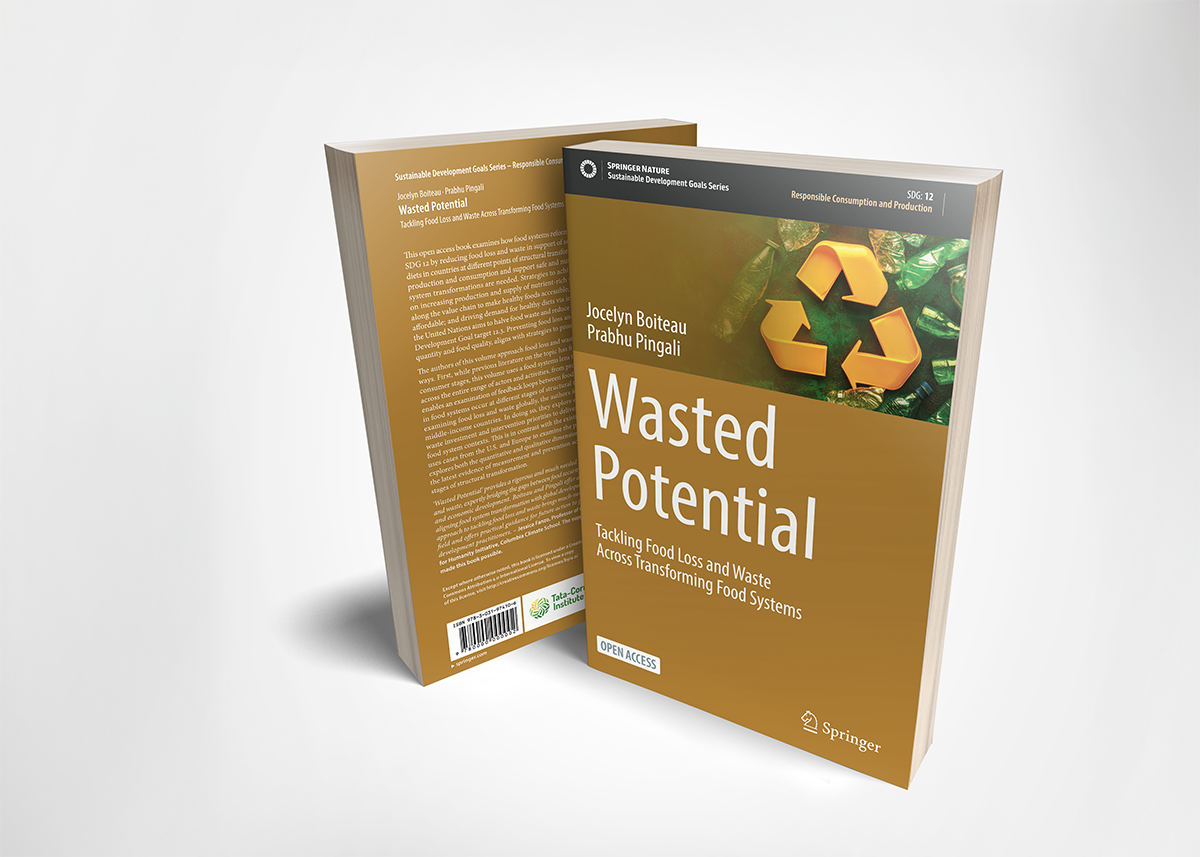
“Wasted Potential” is available to download for free via open access.
“Nutrition seemed like a fun way to combine my interests, and I decided to apply to Cornell’s nutrition major in CALS,” Boiteau says. “I was lucky to get accepted!”
Boiteau didn’t begin thinking about food loss and waste until later, when, as a first-year PhD student, when she took a course taught by TCI Director Prabhu Pingali. “During one lecture, he had a very simple slide on food loss and waste, essentially making the point that perishable foods tend to be the more nutritious foods, but also the most at risk of food loss and waste,” she said
That slide piqued her interest, and the more she studied the topic, the more questions she had. She had found her dissertation topic.
From Ithaca to Andhra Pradesh and back
As a TCI Scholar, Boiteau built her dissertation around a field-based study of food loss and waste in India. She focused on supply chains for tomatoes, a fruit-vegetable popular around the world and especially central to Indian cuisine.
From January 2019 through March 2020, Boiteau led a team surveying 75 farm households and 83 tomato traders in Andhra Pradesh’s Chittoor district, in addition to 52 vegetable traders and 50 retailers in Hyderabad, Telangana. Andhra Pradesh is one of India’s top tomato-producing states and is home to the Madanapalle wholesale market, one of the largest tomato markets in Asia.

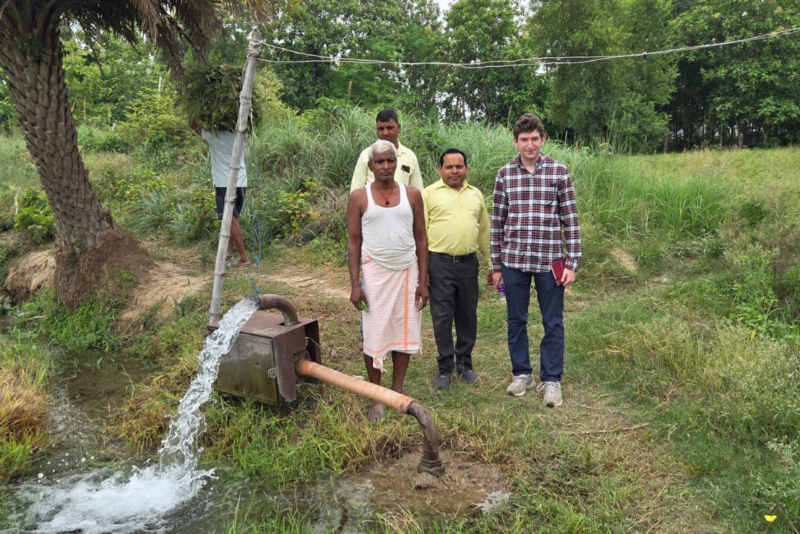
Boiteau spent a year conducting research in the field for her doctoral study of food loss and waste in tomato supply chains. (Photo provided)
Boiteau published her findings in The American Journal of Clinical Nutrition. Her study showed that most food loss occurs after tomatoes are harvested, but before they leave the farm. Lower levels of loss were found to be associated with harvesting during peak season, indicating the potential importance of seasonal supply and demand factors. She also established a link between quality loss and quantity loss, with a 1% increase in preharvest damage corresponding to a 2% rise in postharvest loss. According to her study, nearly 14% of tomatoes suffer preharvest quality loss due to damage from pests and disease, as well as from receiving too much sun or rain, or a lack of rain. Harvesting during peak season was found to reduce the odds of quality loss by 88%, compared to off-season harvests.
“Jocelyn has been very passionate about addressing malnutrition problems in developing countries from her undergraduate days and her experience working with malnourished children in Rajasthan after graduation,” Pingali says. “Her PhD thesis exemplified her deep commitment to addressing important societal problems while meeting the rigorous scientific standards of a Cornell PhD.”
Boiteau now works as senior nutrition impact and innovation director for the Food Systems for the Future Institute, an organization that works to address malnutrition through economically and environmentally sustainable food systems reforms. It’s a role that comes with many hats. She is responsible for research design and implementation; strategy and innovation, such as identifying trends in nutrition and food systems; program leadership to ensure that initiatives are evidence-based, equitable and sustainable; and stakeholder and partner engagement.
Boiteau says that her time at TCI, especially the process of designing and implementing a project in the field, helped to prepare her for new role. While in Andhra Pradesh, she led a team of 10 data collection staff, two supervisors and a project coordinator.
“Throughout the research process, I engaged with strategy, leadership and stakeholder engagement responsibilities in different ways during the research design phase, formative field work, and when I was setting up and running my research sites in Madanapalle and Hyderabad,” she says.
Communication was key. Boiteau adopted a leadership style where questioning things was expected. She would regularly ask staff why they were taking a specific action, and she expected them to ask her questions as well.
“We all gained mutual confidence in each other as we asked questions and solved problems,” she says. “I found that this management approach helped to reduce barriers that sometimes arise in a strictly hierarchical setting and created a positive team dynamic.”
Field-based research wasn’t the only experience that Boiteau brought from TCI to Food Systems for the Future. After completing her doctorate, she stayed with TCI for about four years as a postdoctoral associate. During that time, she expanded her assessment of food loss and waste beyond India, co-authoring “Wasted Potential” with Pingali. The process of writing book with a global scope taught her to think about how innovations and new trends can be brought to bear on a longstanding issue like food loss and waste.
“As a TCI postdoc, I really focused on strategy and innovation, thinking about food loss and waste pathways more globally, the emerging trends to address the problem, and what knowledge is required to guide evidence-based policies,” she says.
Tackling food loss and waste across the globe
Boiteau’s new book, “Wasted Potential,” examines food loss and waste across the globe, providing an evidence-based framework for addressing the issue with the end goal of improving access to healthy diets. Boiteau and Pingali set forth an ambitious policy agenda that builds demand for nutritious foods in order to incentivize steps to reduce loss and waste. They also call for investments in value-adding innovations, such as processing, packaging and cold chain infrastructure, in addition to public infrastructure and financial services.
“This book is in many ways a culmination of the research Jocelyn began as a graduate student and demonstrates her expertise as a researcher, which I have witnessed as a teacher, mentor and colleague,” Pingali says. “I look forward to seeing the positive impact she will no doubt have during her career working to make food systems more nutrition-sensitive and healthy.”
Most previous literature on food loss and waste has focused primarily on the retail and consumer levels. In “Wasted Potential,” Boiteau and Pingali utilize a holistic food systems approach that encompasses the full range of activities across value chains. This comprehensive approach enables them to identify potential tradeoffs between food loss and waste reduction and other goals, such as food security, environmental sustainability and socioeconomic welfare. For example, plastic packaging may help to prevent some food loss, but it creates waste that can be harmful to the environment.
Boiteau herself experienced some tradeoffs involved in waste prevention while she was in Madanapalle. The farmers she met said that they used high levels of pesticides in order to prevent bugs from damaging their crops. Because of that, some even said that they wouldn’t want to eat their own produce. With that in mind, Boiteau once opted to buy organic tomatoes at the market, but soon found out that pesticide-free tomatoes carried their own risks. “Sure enough, maggots started coming out of my tomatoes a few days later,” she says.
Stuck between pesticides and bugs, in the end, Boiteau continued to buy conventional tomatoes out of convenience. “I’m sure they were heavily sprayed,” she says.
Respect for food systems

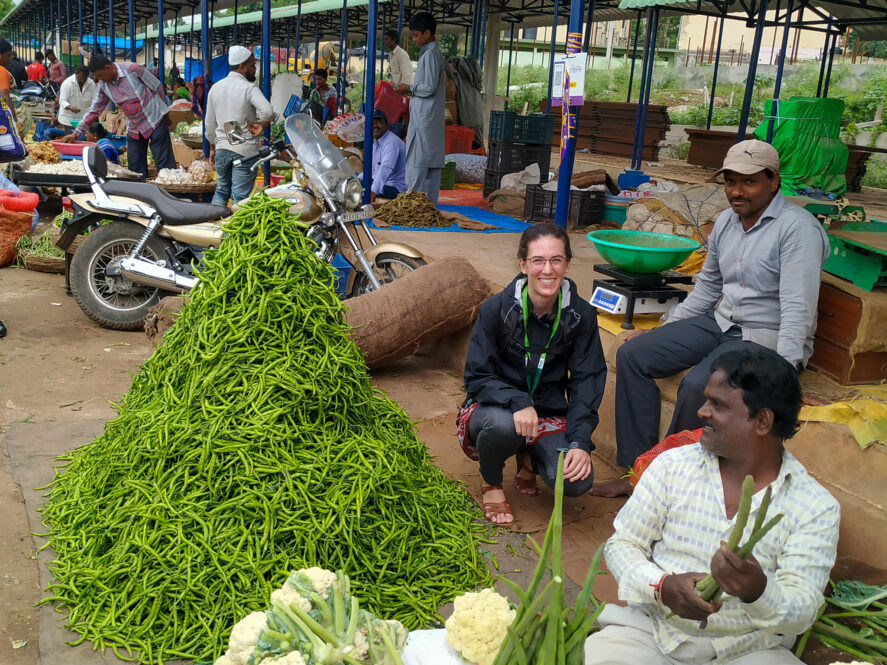
During her research in Andhra Pradesh, Boiteau saw firsthand how food waste affected people’s daily lives. (Photo by Jocelyn Boiteau/TCI)
Experiences like that profoundly impacted Boiteau’s approach to writing “Wasted Potential.” In Andhra Pradesh, she met with different people—farmers, wholesalers and retailers—whose livelihoods all depended on selling tomatoes, giving them a personal stake in reducing loss and waste. She also saw how both waste and interventions designed to mitigate it affected the surrounding environment and quality of life of local communities—decomposing crops attracting pests at food markets; food packaging littering the streets, and burning household waste polluting the air.
“For me, I often think about food loss and waste in terms of respect,” she says. “Respect for the immense efforts and resources it takes to grow and transport nutritious food for a living, respect for consumers by making nutritious and appealing foods accessible, and respect for the environment by considering how much waste is created and how it is managed.”
Featured image: Jocelyn Boiteau led a team surveying 75 farm households and 83 tomato traders in Andhra Pradesh during her doctoral research, in addition to 52 vegetable traders and 50 retailers in Telangana. (Photo provided)