

News

NEWS
Dyson BusinessFeed: Tata-Cornell Institute’s co-authors launch new book on food systems in India
May 30, 2019
The BusinessFeed announces news and updates important to the “our business is a better world” mission of the Charles H. Dyson School of Applied Economics and Management; in this case, an article about the launch of TCI’s new Food Systems book. TCI makes its academic home at the Dyson School. About the book The Tata-Cornell Institute…

NEWS
Op-Ed appears in The Economic Times
May 15, 2019
In the op-ed “We’ll Be What We Eat,” Prof. Prabhu Pingali discusses what India will need to do to meet the UN Sustainable Development Goal 2 (SDG 2) of ‘Zero Hunger’ by 2030. To meet SDG2, India needs to reduce the number of its hungry by at least 200 million. Beyond access to sufficient food,…
BLOG
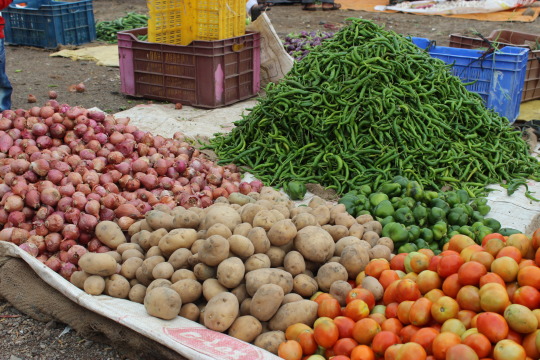
Op-Ed: We’ll Be What We Eat
May 14, 2019
With a five-fold increase in food grain production since 1947, India has moved away from its dependence on food aid to become a net food exporter. However, the country still shares a quarter of the global hunger burden. By 2011, India had been able to achieve the 2000 UN-sanctioned Millennium Development Goals’ (MDGs) poverty reduction target for 2015, but it…
BLOG
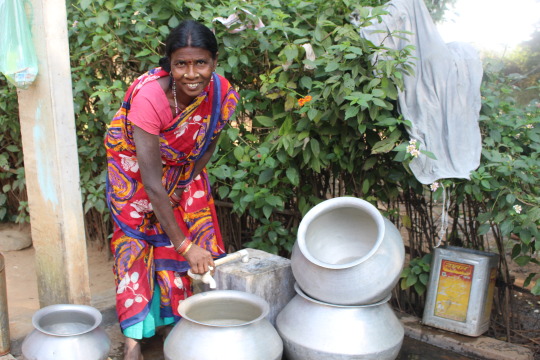
Podcast shows how piped-in water changes lives
May 8, 2019
The latest episode of the “What Makes Us Human?” podcast series, explains the impact of clean, piped-in water on women and girls in India. This story originally appeared in the Cornell Chronicle. “Clean Water,” a new episode of the “What Makes Us Human?” podcast series, explains the impact of clean, piped-in water on women and…
BLOG
‘Clean Water’ – a podcast episode on what makes us human
May 8, 2019
This is an episode from the “What Makes Us Human?” podcast’s fourth season, “What Does Water Mean for Us Humans?” from Cornell University’s College of Arts & Sciences. Prof. Prabhu Pingali explains the impact of clean, piped-in water on women and girls in India. Read about the episode in the Cornell Chronicle. Review the transcript…
NEWS
‘Clean Water’ – a podcast episode on what makes us human
May 8, 2019
The latest episode of the “What Makes Us Human?” podcast series, explains the impact of clean, piped-in water on women and girls in India. A recording and transcript of the podcast is available. This story originally appeared in the Cornell Chronicle. “Clean Water,” a new episode of the “What Makes Us Human?” podcast series, explains the…

NEWS
TCI hosts ZEF researcher for seminar on food consumption choices
April 23, 2019
Till Ludwig is a Research Fellow at the Center for Development Research (ZEF) in Bonn, Germany. His research focuses on research focus on behavioral economics, consumer choices and poverty studies in India, He presented on, “The Effect of Individual Preferences on Food and Nutrition Security: Evidence of How Risk Preference and Altruism Affect Food Consumption Choices”. The…

NEWS
Seminar in International Nutrition presented by TCI and DNS
April 18, 2019
The Division of Nutritional Sciences (DNS) and the Tata-Cornell Institute(TCI) co-hosted a seminar featuring Dr. John McDermott, Director, CGIAR Research Program on Agriculture for Nutrition and Health (A4NH), led by IFPRI. The speaker presented on, “Improving nutrition and health through agriculture: What have we learned? What’s next?” A lunchtime Q&A was organized immediately following the seminar so…
NEWS
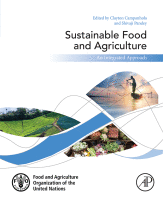
Policies for Sustainable Food Systems
April 8, 2019
In a new book published by FAO and Elsevier, Dr. Prabhu Pingali writes on the public policies necessary to achieve sustainable food and agriculture systems. See Chapter 45 in Sustainable Food and Agriculture: An Integrated Approach. Chapter Abstract Over the past 50 years, agricultural growth has contributed to jumpstarting overall economic growth and poverty reduction in many countries,…

BLOG
Solving the complimentary feeding gap in infants using novel food technology
April 1, 2019
The food industry has always succeeded in adding novel food products to supermarket shelves, according to the needs and demands of consumers. In recent years, food scientists and industry researchers have focused on adding convenience and ease of utilization in food products. The trend is not only limited to foods targeting working adults and students,…