

Tag: Prabhu Pingali
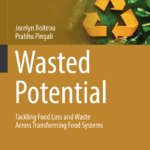
Wasted Potential: Tackling Food Loss and Waste Across Transforming Food Systems
As the world seeks to achieve zero hunger and mitigate the environmental degradation tied to food production and consumption, reducing food loss and waste is a critical challenge for policymakers in developed and developing countries alike. Wasted Potential: Tackling Food Loss and Waste Across Transforming...
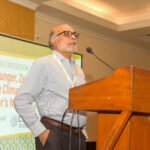
In Bihar, TCI Presents a Path for Productive, Climate-Smart Agriculture
The Tata-Cornell Institute for Agriculture and Nutrition (TCI) unveiled evidence for three pathways to make agriculture in Bihar more productive and environmentally sustainable at an event in Patna on October 16. The event was attended by government officials, researchers and…

Conflicting Societal Goals and the Sustainability Challenge: Eliminating Hunger Versus Climate Action
As a global society, we have historically pursued large, collective goals—to end hunger, to stop war, to halt climate change. The United Nations (UN) has played a major role in global goal setting, beginning with the Millennium Development Goals and…
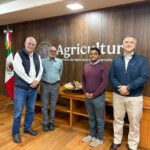
TCI Meets with Mexican Secretary of Agriculture to Discuss FPO Research
Researchers from the Tata-Cornell Institute for Agriculture and Nutrition (TCI) met with Mexico’s secretary of agriculture and rural development, Julio Berdegué Sacristán, on Friday, September 5, in Tlaxcala, Mexico. The researchers were invited to discuss potential collaboration to promote the…

Can Gene-Edited Crops Revolutionize Agriculture in Developing Countries?
The emergence of gene-editing technologies, particularly CRISPR-Cas9, has ushered in new possibilities for transformative advancements in agriculture, healthcare and environmental sustainability. The discovery of CRISPR-Cas9 in 2012 has the potential to accelerate the pace of innovation and enable more precise…
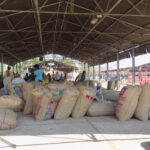
Q&A: What Are Value Chains and How Can They Improve Indian Diets?
In May 2025, the Tata-Cornell Institute for Agriculture and Nutrition (TCI) announced its newest project, Promoting Value Chains for Climate Resilience and Nutritious Diets. TCI researchers will map and analyze the value chains for key nonstaple food groups in India—coarse…

TCI Researchers Offer Plan to Reduce Environmental Impact of PDS
India can reduce the negative environmental impact of the Public Distribution System (PDS) by replacing some of the rice and wheat procured for the program with millets and including more states in the procurement process, researchers from the Tata-Cornell Institute…
PDS Leakage Is Down, but There’s a Catch
India’s massive food program, the Public Distribution System, provides subsidized grain to more than 800 million people each year, but not all of it reaches consumers. In 2011–12, about 42% of the 51.4 million metric tons of grain distributed through…
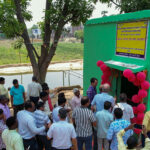
TCI Inaugurates Bihar’s First Agrivoltaics Site
The Tata-Cornell Institute for Agriculture and Nutrition (TCI) and Preservation and Proliferation of Rural Resources and Nature (PRAN), along with Jain Irrigation Systems, celebrated the inauguration of an agrivoltaics installation in Bihar’s Gaya ji district on Monday, June 9. The…
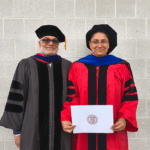
TCI Scholars Celebrated During Cornell Commencement
Two TCI Scholars were recognized for their achievements during commencement ceremonies at Cornell University on Friday, May 23.
Shree Saha graduated with a Ph.D. in applied economics and management from the Dyson School of Applied Economics and Management. Shivranjani Baruah…