Reduce and Reuse: The Hidden Challenges of Bulk Packaging
This blog post is the second in a series exploring the connection between food packaging and food loss and waste within sustainable food systems, focusing on nutritious, perishable foods. Throughout this series, food loss and waste will be defined as a reduction in the quantity or quality of the edible portion of food intended for human consumption when food is redirected to non-food uses or when there is a decrease in the nutritional value, food safety, or other quality aspect from the time food is ready for harvest or slaughter to consumption. Read the first post in the series.
At India’s bustling vegetable wholesale markets, bags, crates and bundles filled with fresh produce are unloaded, piled high, and prepared for the next leg of their journey to reach consumers. These markets serve as critical links between rural farms and urban retailers, facilitating the movement of vast quantities of food to feed India’s growing cities. This complex logistical operation relies heavily on bulk packaging, which is essential for protecting food during transit, facilitating handling and sometimes conveying information. Together, the design and implementation of bulk packaging influences cost, performance and sustainability tradeoffs.
Mitigating food losses: the role of bulk packaging
Preserving the quality of perishable foods requires careful management of time, temperature, moisture and handling. While single-use plastics and consumer packaging often dominate the packaging conversation, bulk packaging—critical for fresh, nutritious foods like fruits, vegetables and animal products—deserves greater attention for its essential role in facilitating the movement of food from farm to market.
Well-designed bulk packaging helps minimize quality deterioration and spoilage by:
- Improving efficiency: Streamlining the movement of food, saving valuable time
- Controlling environment: Managing temperature and moisture to create optimal conditions
- Enhancing handling: Reducing physical damage that can accelerate spoilage
While the use of consumer packaging for fresh food varies globally, bulk packaging remains essential across all food value chains to deliver high-value, nutritious foods to consumers. This makes the relationship between bulk packaging and food loss and waste (FLW) a critical factor in delivering sustainable, healthy diets to consumers.
The ideal design and materials for bulk packaging are tailored to the specific needs of each food value chain, including the perishability of the food and the length and available infrastructure of the value chain. However, access to and the affordability of various packaging options often constrain value chain actors. Even when better alternatives exist, they may be impractical and therefore unused. Over time, improved packaging solutions can become the new standard.
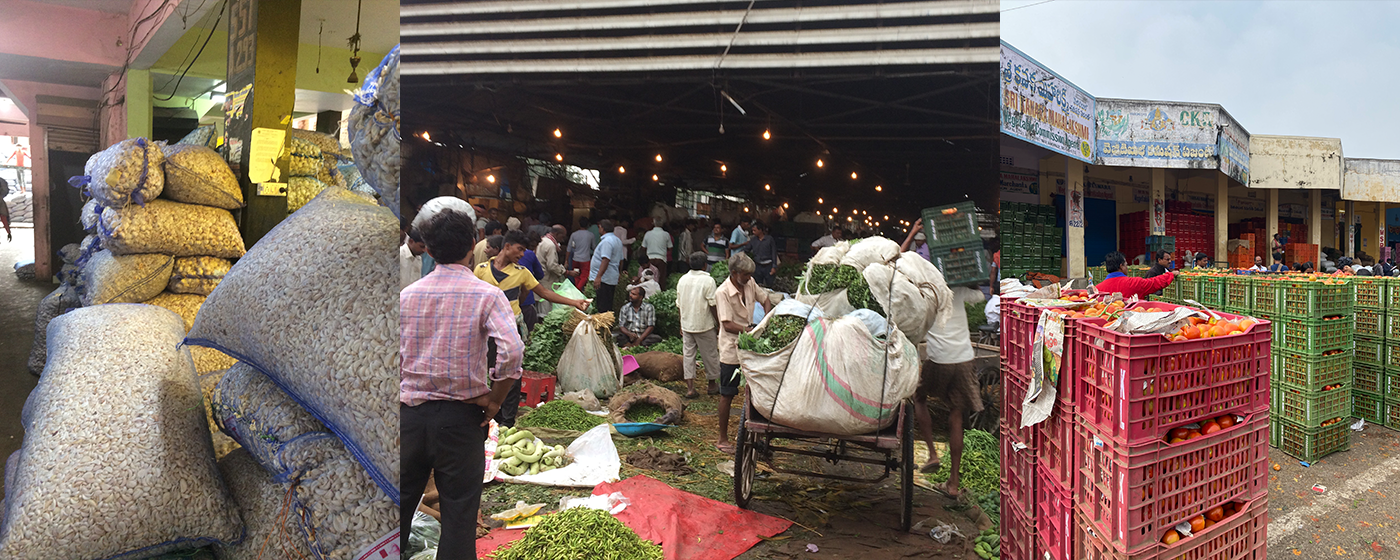
Examples of bulk packaging at vegetable wholesale markets in India. From left to right: Azadpur Vegetable Wholesale Market, Delhi; Bowenpally Vegetable Wholesale Market, Hyderabad; Madanapalle Tomato Market, Madanapalle. (Photo by Jocelyn Boiteau/TCI)
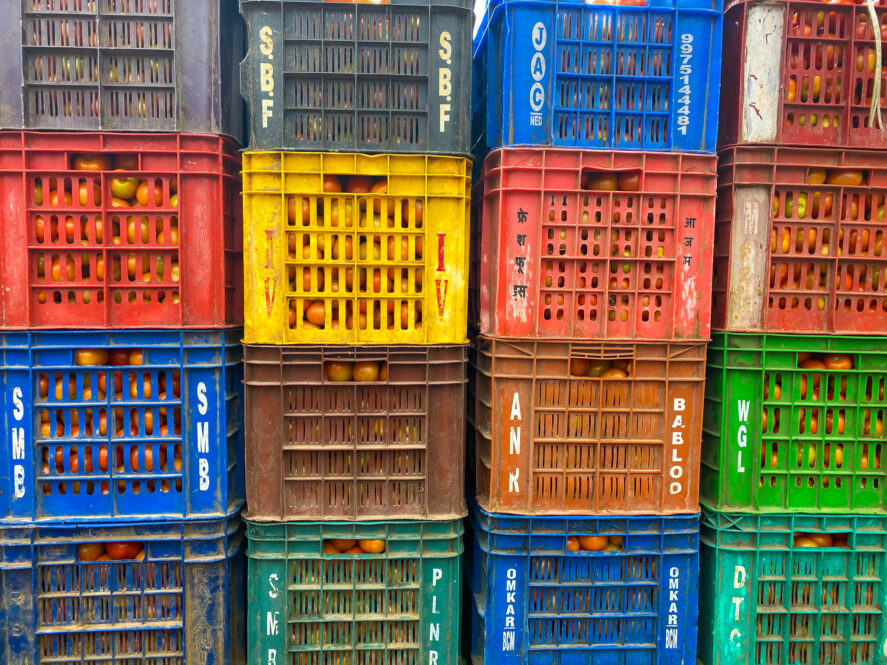
This was the case with tomato value chains in India, where reusable plastic crates replaced woven baskets. This transition, while positive in many respects, also introduced new challenges, such as heavier loads and higher costs, impacting both working conditions and decisions about replacing broken crates.
The sustainability of food packaging extends beyond its role in reducing FLW. Bulk packaging design, handling, use and end-of-life management all contribute to its environmental impact.
Identifying bulk packaging sustainability tradeoffs
Current trends in sustainable packaging prioritize reducing environmental footprints by minimizing the material used per unit of food. Therefore, packaging durability can play a crucial role. Using less durable materials, like biodegradable cardboard, can offer environmental benefits. Conversely, more durable packaging extends its lifespan, improving protection and increasing reuse potential.
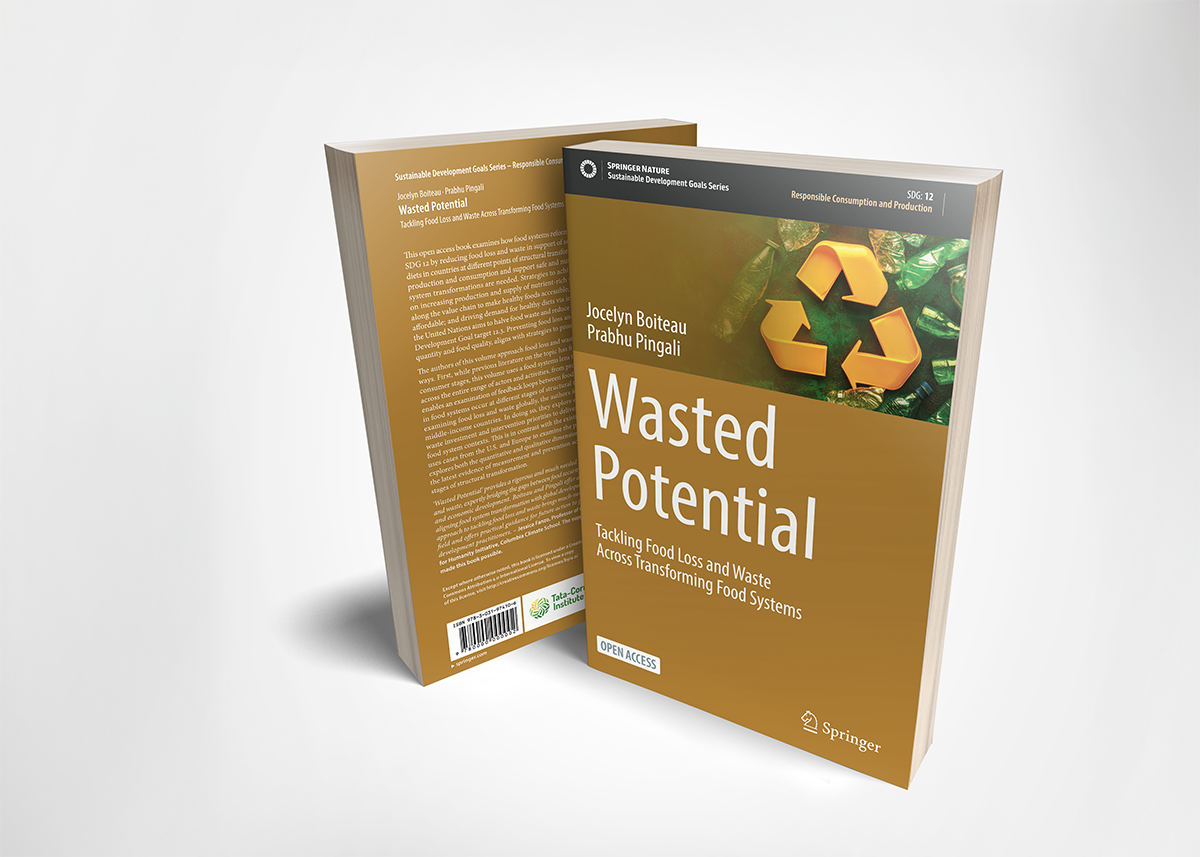
TCI’s “Wasted Potential” further explores the relationship between food packaging and food loss and waste. It is available to download for free via open access.
To better assess these tradeoffs, it is helpful to distinguish between single-use and multi-use bulk packaging and the logistics of multi-use systems. “Closed-loop” systems ensure packaging returns to the original supplier for reuse, creating a circular flow. In contrast, “open-loop” systems lack the return to the original supplier, allowing packaging to be reused or recycled by others. The sustainability of single- and multi-use bulk packaging depends on the value chain structure, the capacity of its actors, and the potential for reuse at various destinations.
During fieldwork at the Madanapalle tomato market in Andhra Pradesh, wholesalers explained that closed-loop systems are often used for shipments to nearby cities. Traders are more willing to invest in durable (and more expensive) plastic crates that are returned. For longer distances, like shipments to Odisha, open-loop systems are preferred, with traders opting for cheaper, less durable crates that are not expected to be returned.
Cost is a primary driver in these decisions on bulk packaging. A trader in the Philippines, for example, noted that collapsible metal crates must be reused at least 80 times to recover their initial investment. However, reuse potential depends on proper handling and maintenance, which in turn influences decisions about replacing damaged packaging.
Therefore, reusing bulk packaging can conflict with ensuring food quality and safety. The high moisture content of fruits, vegetables and animal products makes them particularly perishable and at risk of microbial growth and contamination when physically damaged. Wooden crates, often held together with nails or staples, can develop rough surfaces, splinters or sharp points that puncture produce. Similarly, plastic crates can break, creating sharp edges that also physically damage produce and accelerate spoilage.
A study comparing reusable plastic crates to single-use cardboard and wooden boxes for fresh cauliflower found that while plastic crates had a lower environmental impact, they posed a higher risk of cross-contamination with pathogens. Proper handling, maintenance and cleaning can mitigate these risks but require effective implementation.
At the Madanapalle market, rough handling of empty plastic crates was common. Because replacements are costly, broken crates often remained in circulation. Furthermore, crates were typically stored on the ground and not sanitized. This combination of rough handling and inadequate maintenance shortens the lifespan of the crates, increases the risk of contamination and spoilage, and ultimately contributes to FLW, undermining the sustainability of multi-use packaging.
The future of bulk packaging
While bulk packaging hasn’t received the same attention as consumer packaging in sustainability discussions, it is important to consider the emerging trends and challenges in implementing sustainable designs, practices and systems. As value chains lengthen to reach growing urban populations and efforts to improve diets by increasing nutrient-rich food consumption intensify, improved bulk packaging will become increasingly important. Estimating the sustainable impact of bulk packaging requires considering the packaging-food loss interaction and the real-world reuse lifecycle, based on actual handling practices.
Jocelyn Boiteau is a TCI alumna and director of nutrition impact and innovation at Food Systems for the Future.
Featured image: Tomatoes are packed in plastic crates at the Madanapalle wholesale tomato market. (Photo by Jocelyn Boiteau)