New Report Offers First-Ever Assessment of India’s Farmer Producer Organizations
A new report from the Tata-Cornell Institute for Agriculture and Nutrition (TCI) and the Bankers Institute of Rural Development (BIRD) Lucknow provides the first comprehensive assessment of the Indian government’s push to promote farmer producer organizations (FPOs) as a means to advance agricultural development in the country.
“The State of Farmer Producer Organizations in India: Performance, Trends, and the Role of Gender” provides critical information about the FPO ecosystem in India, including national, state and district-level FPO promotion and survival rates, as well as governance and financial performance based on a range of metrics, such as gender leadership, size and crops produced. The report also takes a close look at the impact of gender on FPO performance, revealing that women-led FPOs outperform those with mixed or predominantly male leadership.
“The Indian government has made a big bet on the ability of FPOs to improve agricultural productivity and increase farmer incomes,” TCI Director Prabhu Pingali said. “Assessing the FPO ecosystem—what works and what doesn’t—is crucial to ensuring that wager pays off.”
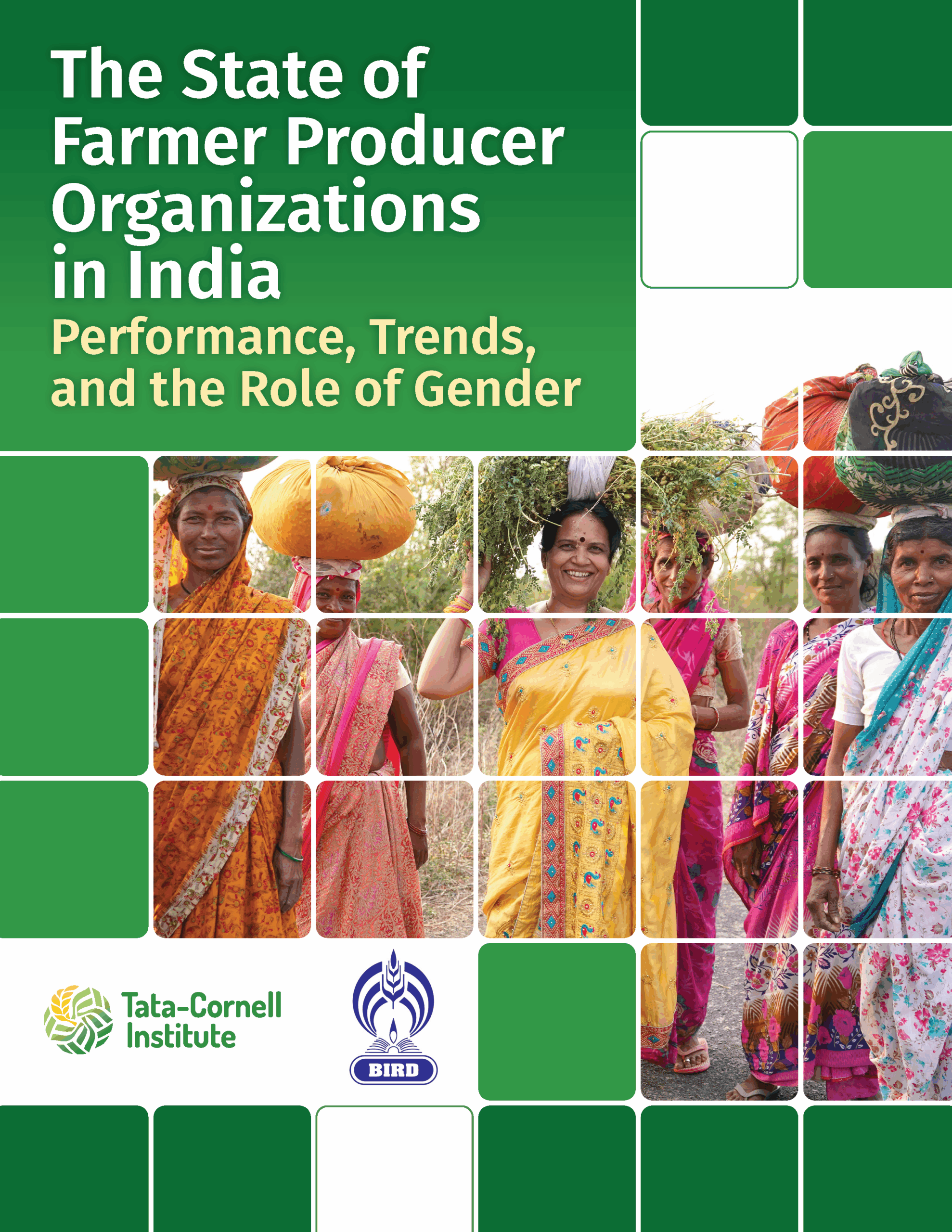
“The State of Farmer Producer Organizations in India” is available for download.
FPOs allow smallholder farmers to aggregate their crops and collectively improve their access to credit, inputs, information, and markets, potentially improving farmer income and furthering agricultural development. FPOs can be incorporated in a variety of ways, typically as companies or cooperatives.
The report provides an overall assessment of the FPO landscape in India. According to researchers, 259,344 FPOs exist in India. As of September 2024, 45,547 farmer producer companies have been promoted in the country, but just 43–49% continue to operate once government support concludes. Under the Indian government’s 10,000 FPO Scheme, FPOs receive three to five years of support through implementing agencies like the National Bank for Agriculture and Rural Development (NABARD) and the Small Farmers Agri-Business Consortium (SFAC).
The overall financial outlook for FPOs is mixed, according to the report. Larger organizations with more shareholders, which have the financial resources to invest in value addition, market infrastructure and professional management, outperform smaller ones, which often struggle with basic operational expenses. Researchers attribute lower FPO profitability to limited market access, smaller operational scales and infrastructure challenges. The report also shows low debt utilization among most FPOs. Researchers said that this reflects limited access to formal credit rather than conservative financial management.
“The financial reality of India’s FPO ecosystem is complex, with significant successes alongside substantial failures,” Pingali said. “Understanding why some FPOs thrive while others drown will provide the foundation for designing more effective support systems and infrastructure across the country.”
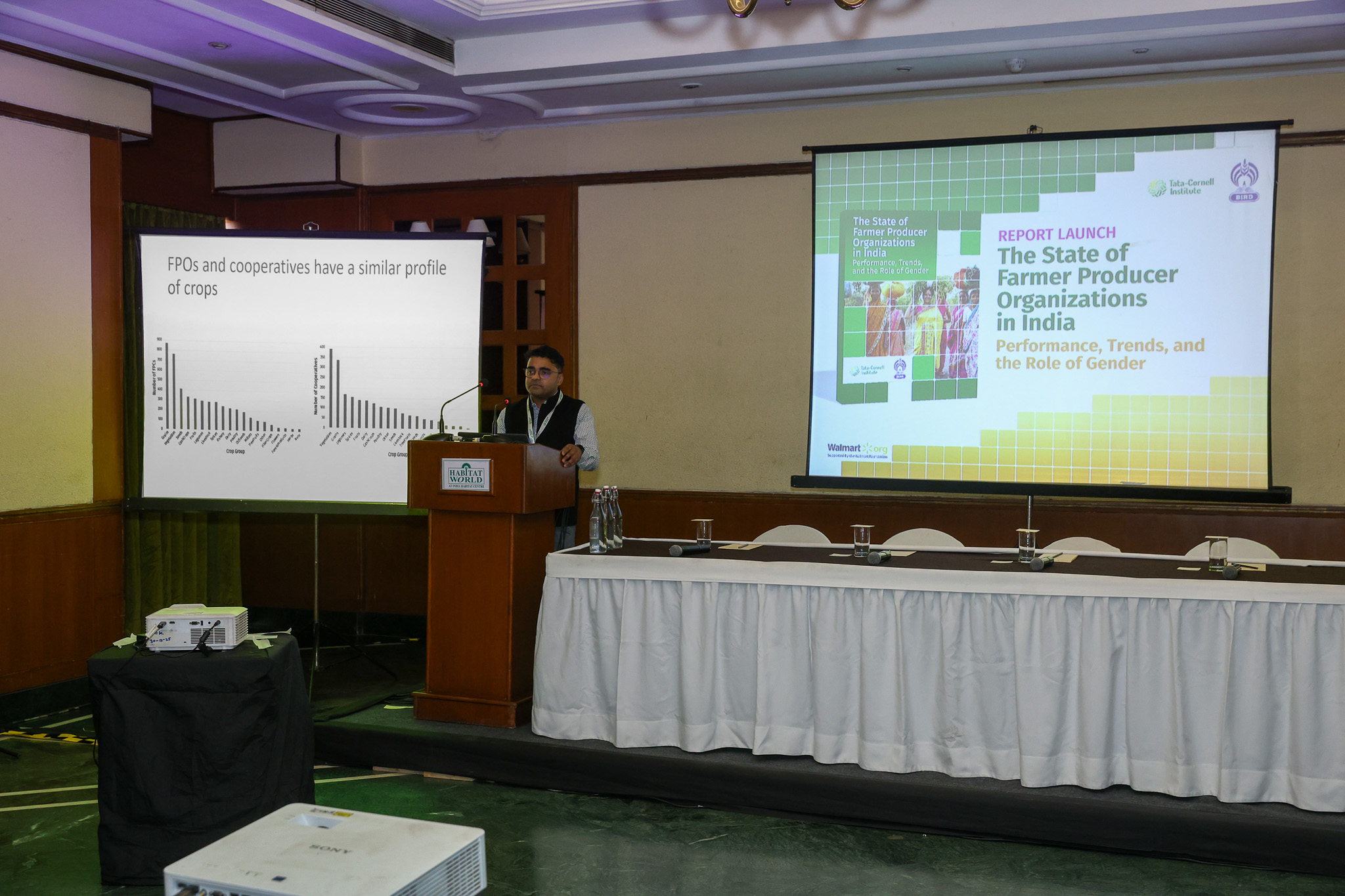
TCI Assistant Director Mathew Abraham presented research from the report at a launch event in Delhi. (Photo by TCI)
The report provides a special focus on the role of gender in FPO performance. According to researchers, female-led FPOs exhibit higher survival rates and outperform their male-led counterparts by most financial metrics. FPOs with female or mixed leadership survive past their government support period at rates 4–13% higher than those led by men. Women-led FPOs are also more profitable, more effectively utilize debt, exhibit improved liquidity management, and have more efficient operations.
Despite the higher performance of women-led FPOs, the report shows that they are not promoted equally across India. For example, one in three FPOs in Jharkhand are women-led, while in Haryana, only one in 20 are led by women.
“When supported by appropriate policies and institutional frameworks, along with a sustained commitment to addressing gender-specific constraints, women’s collectives can be effective vehicles for agricultural development,” Pingali said.
In addition to providing a financial picture of the state of women-led FPOs, the report also features case studies of six women-led FPOs that emerged from self-help groups—collectives of women who pool resources to access business loans, provide mutual support and foster economic development. TCI researchers found that women-led FPOs that emerged from self-help groups drew considerable lessons from their experience that helped them establish and sustain their FPOs, such as fostering group cohesion, financial literacy and democratic governance.
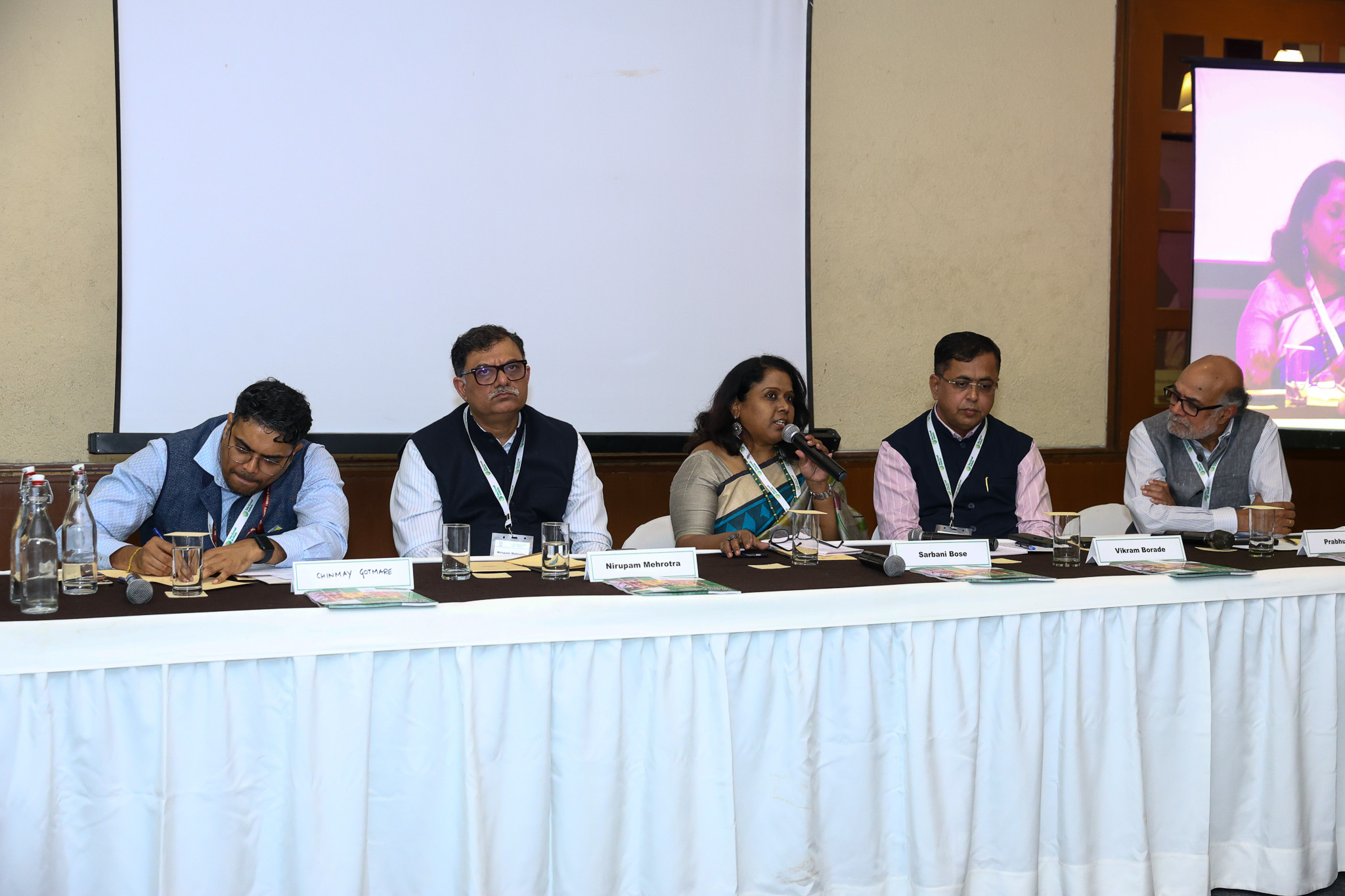
From left to right: Chinmay Gotmare, Nirupam Mehrotra, Sarbani Bose and Vikram Borad participated in a panel discussion chaired by TCI Director Prabhu Pingali during the launch event for the report. (Photo by TCI)
The report was prepared using data from TCI’s FPO Platform for India, a data platform with comprehensive information on nearly 263,074 FPOs, including crops produced, services provided, supporting organizations and financial information.
The report was unveiled at an event organized by TCI and BIRD Lucknow in Delhi on February 19. The event also featured a demonstration of the FPO Platform for India and its newest tool, FPOConnect, which allows FPOs to digitally market themselves and interact with potential business partners and other service providers.
“The State of Farmer Producer Organizations in India” and the FPO Platform for India are part of TCI’s project on FPO-Led Small Farm Access Models. With support from the Walmart Foundation, the project aims to create lessons, tools, and resource pathways to strengthen small farm aggregators in India, while simultaneously catalyzing a community of practice of funders, implementers, and policy stakeholders.
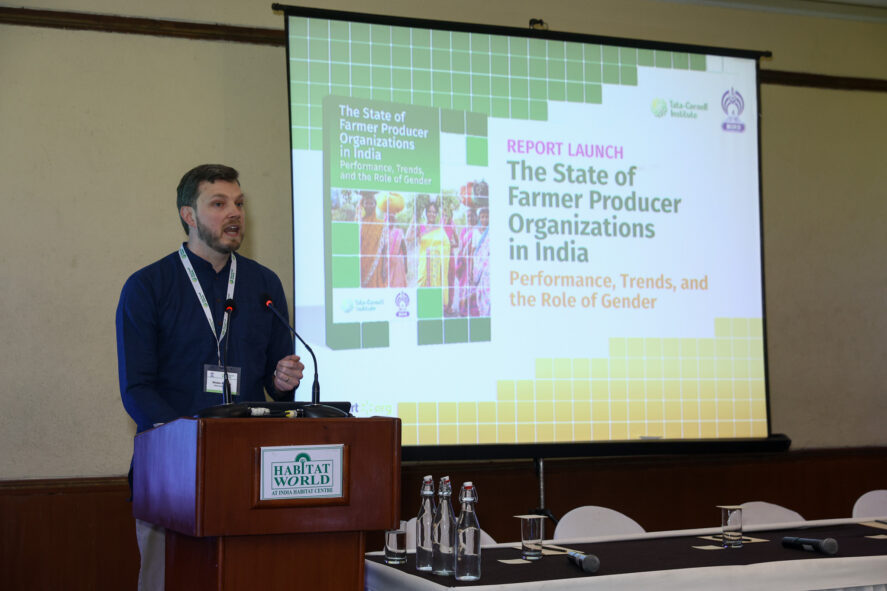
Featured image: TCI research support specialist Dieter Bouma speaks during the launch event for “The State of Farmer Producer Organizations in India.” (Photo by TCI)