Looking Towards the Future of Effective and Sustainable Food Packaging
This is the final post in a four-part series exploring the connection between food packaging and food loss and waste within sustainable food systems, focusing on nutritious, perishable foods. Throughout this series, food loss and waste will be defined as a reduction in the quantity or quality of the edible portion of food intended for human consumption when food is redirected to non-food uses or when there is a decrease in the nutritional value, food safety, or other quality aspect from the time food is ready for harvest or slaughter to consumption. Read the first, second and third posts in the series.
Balancing food loss and waste (FLW) reduction with environmental sustainability is the core challenge of modern food packaging. While the future of sustainable packaging has centered on material innovation, especially for improved end-of-life disposal, the critical question remains: how do we translate these advancements into effective and scalable solutions?
Reducing FLW through packaging innovations
To improve FLW reduction, current food packaging innovations focus on two primary approaches: active packaging and intelligent packaging.
Active packaging aims to extend shelf life by incorporating active agents that maintain or enhance food quality. These agents, delivered via sachets, pads or films, work to counteract the most common spoilage factors, including microbial growth and oxidative degradation. They function by:
- Absorbing or scavenging undesirable substances: This includes oxygen, moisture and off flavors that negatively impact quality and accelerate spoilage.
- Releasing substances to maintain freshness: This includes preservatives and antioxidants that protect food and improve shelf stability.
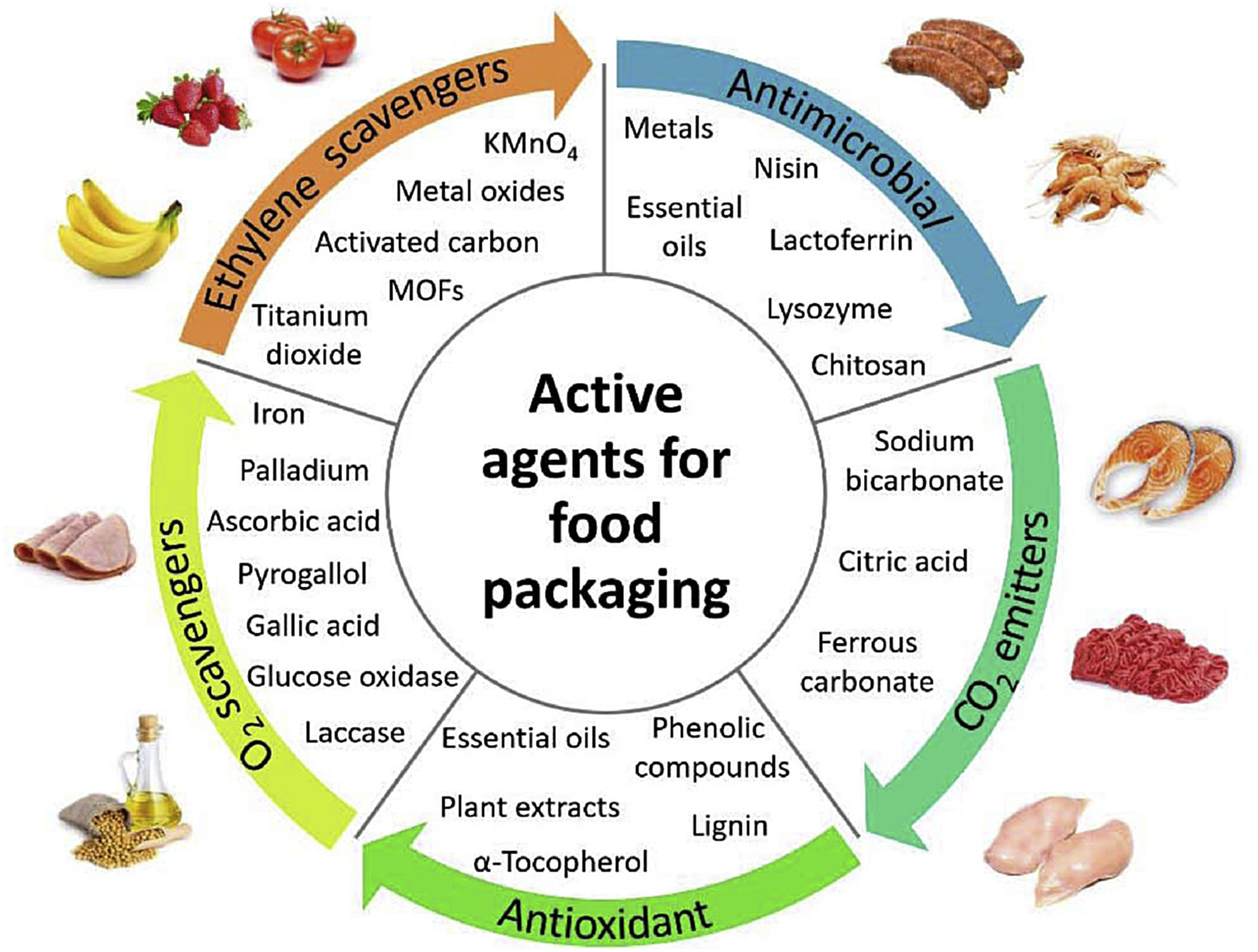
Source: Vilela et al. A concise guide to active agents for active food packaging (2018).
Ethylene scavengers help to extend the shelf life of fruits and vegetables by slowing ripening, allowing for a longer window between harvest and consumption and reducing vulnerability to damage and microbial growth. Similarly, oxygen scavengers prevent oxidation. This is important because exposure to oxygen can lead to undesirable color and odor changes, as well as nutrient degradation.
Emitters are active agents that extend the shelf life of foods particularly susceptible to microbial growth and oxidation. Carbon dioxide, known for its antimicrobial properties, and antioxidants, are commonly used in packaged meats and fish. Antioxidant emitters stabilize oxidation-sensitive foods, such as high-fat products like meat, fish, nuts and oils.
What if packaging could tell you how food was handled or how fresh it is? Intelligent packaging monitors food conditions using sensors that indicate signs of early spoilage and deterioration, including:
- Time-temperature indicators for refrigerated and frozen foods that reveal if food has been exposed to unsafe temperatures for too long
- Integrity indicators for sealed foods that let you know how long packaging has been open
- Freshness indicators that detect microbial growth, giving real-time information on the food’s condition
- Radio-frequency identification (RFID) tags for traceability that track food from farm to fork, increasing transparency and safety
For intelligent packaging to be effective, indicators must be accurate and user-friendly. False negatives, indicating safety when food is unsafe, and false positives, leading to unnecessary disposal, must be avoided. Clear interpretation is also essential, as the variety of indicators can cause confusion for value chain actors and consumers alike. Drawing on lessons from food date labels, we know that label variety and lack of clarity contribute to unnecessary food waste.
Both active and intelligent packaging face challenges related to food safety and cost. All materials that contact food, such as packaging, sachets, pads and tags, must meet stringent safety standards. Furthermore, high costs can be a significant barrier to adoption, hindering their potential to achieve broad sustainability benefits.
Reducing sustainability tradeoffs by innovating food packaging design
How can we have healthy food and a healthy planet too? Innovative packaging designs are proving that reducing food waste, minimizing material use, and enhancing end-of-life sustainability aren’t mutually exclusive goals. However, effectively scaling and targeting innovations to the right foods pose persistent challenges.
Innovations in food packaging are increasingly focused on material selection and biodegradability, aiming to reduce reliance on conventional plastics.
For pre-packaged fresh produce, beechwood cellulose net bags offer a sustainable alternative, providing consumer convenience while minimizing environmental impact. Similarly, recyclable cardboard and related materials are being adopted for delicate items like berries, reducing plastic usage. Flexible packaging derived from agricultural waste further contributes to this shift, promoting biodegradability and minimizing plastic waste. These material choices emphasize sustainability through both composition and compostable end-of-life options.
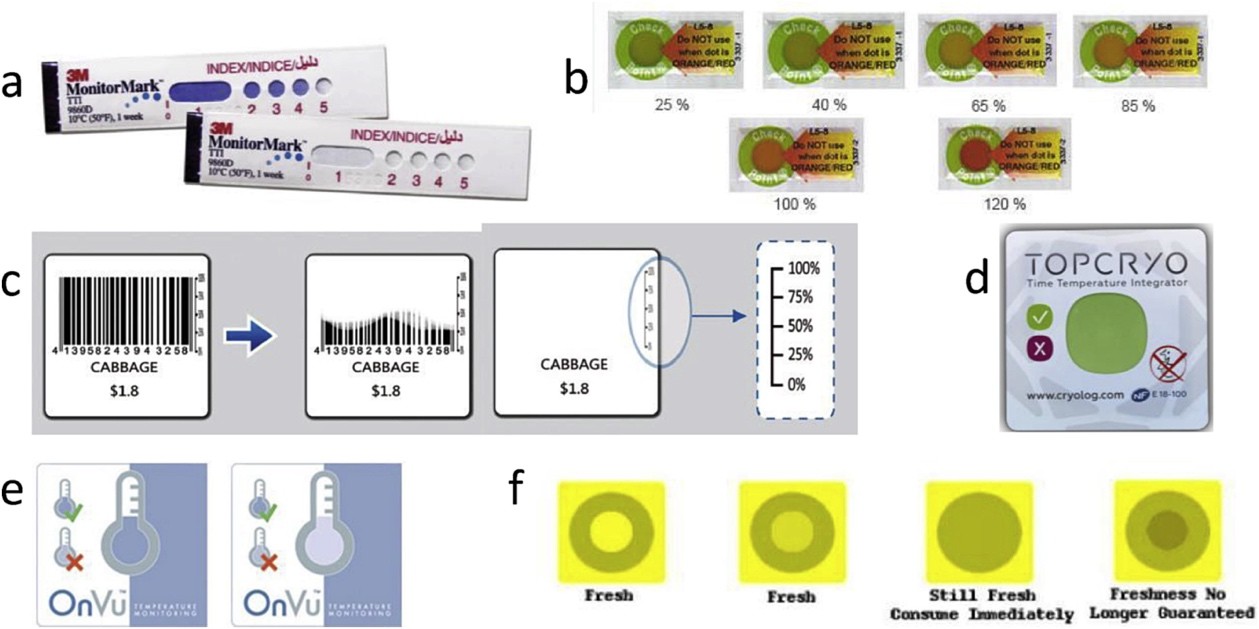
Examples of time-temperature indicators: a) 3M Monitor Mark, b) ViTSAB, c) FreshCode, d) TopCryo, e) OnVu, f) Fresh-Check. Source: Poyatos-Racionero et al. Recent advances on intelligent packaging as tools to reduce food waste. (2018).
Beyond material substitution, advancements in edible films and coatings offer a shift away from pre-packed foods while still addressing FLW concerns. These biodegradable layers regulate gas exchange, moisture transfer and oxidation, extending the shelf life of fresh fruits and vegetables. Matching the films or coatings to the right foods depends on adherence to food surfaces and potential impacts sensory qualities, such as appearance, aroma and taste. Companies like Apeel demonstrate the viability of these technologies, particularly for citrus and avocados, where peels are typically inedible.
While plastic remains important for protecting high-risk foods like meat and fish, efforts are focused on hybrid packaging solutions. For example, combining plastic’s barrier properties with paper-based trays and sleeves reduces overall plastic usage. However, sustainable end-of-life management, including recycling and biodegradability, remains essential and requires robust infrastructure.
Despite the prevalence of pre-packaged items, unpackaged fresh produce remains common in diverse markets, from traditional to modern retail. Given the ubiquitous nature of bulk packaging across food value chains, it is a key area for targeted sustainability improvements. Bulk packaging reusability enhances sustainability, contingent on the number of reuse cycles. Optimizing packaging design, including size and ergonomics, alongside proper handling training, extends its lifespan.
The potential for plastic to minimize material consumption, though initially counterintuitive, is evident in bulk packaging applications. Cardboard containers, particularly waxed varieties used with ice, are vulnerable to moisture, fostering pathogen growth and hindering recyclability. To mitigate these issues, field-packing systems incorporating modified atmosphere packaging and durable, reusable plastic crates have been developed. This approach maintains packaging integrity, enhances hygiene and extends product freshness.
Navigating the complexities of sustainable food packaging
Implementing improved packaging solutions across food value chains presents significant challenges. Businesses must justify investments in new infrastructure and training, while consumer demand for both product quality and eco-friendly options drives adoption. Identifying successful approaches hinges on having granular data regarding food packaging practices, particularly within the “hidden middle” of value chains, to identify targeted interventions.
Effective policy frameworks are essential for incentivizing sustainable packaging development and that align with food-based dietary guidelines, labor conditions, and waste management goals. Further research is needed to understand how packaging supports access to safe, nutritious foods, impacts labor conditions and adapts to shifting dietary trends towards sustainable options. Evidence-based policies on sustainable food packaging must be comprehensive and consider:
- Choice and prioritization of sustainability impacts and impact geography (local vs. global)
- Differences in the relative contribution of food packaging to overall sustainability impacts
- Potential changes in food packaging trends (types of packaging and waste generation) based on shifts in diet patterns
- Changes in FLW generation (cascading effects and feedback loops) based on changes in bulk and consumer food packaging
Jocelyn Boiteau is a TCI alumna and director of nutrition impact and innovation at Food Systems for the Future.
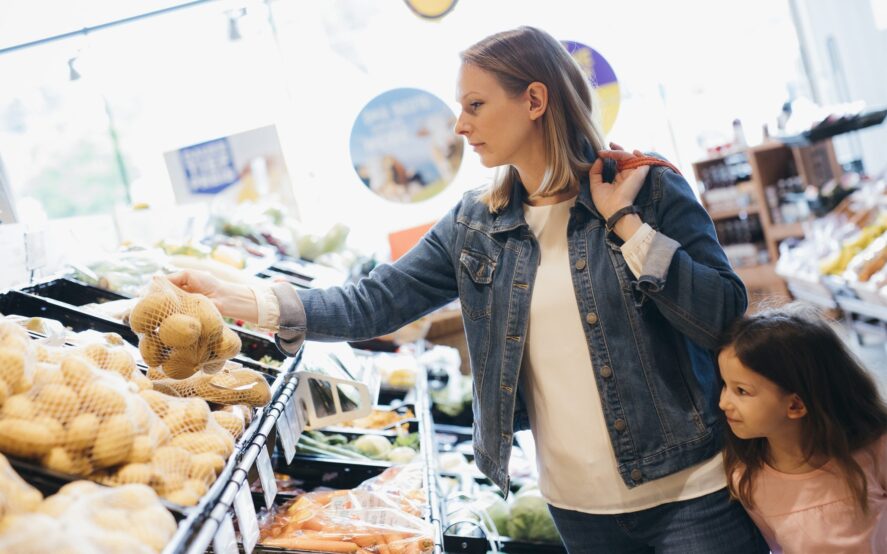
Featured image: New types of food packaging, such as biodegradable netting made from cellulose, can help to address food loss and waste without harmful environmental tradeoffs, like increased plastic waste. (Photo by Packnatur)