With Agrivoltaics, PM-KUSUM 2.0 Can Unlock Inclusive Rural Transformation
Agrivoltaics was still at an early stage of development in India when the Pradhan Mantri Kisan Urja Suraksha evam Utthaan Mahabhiyaan (PM-KUSUM) was launched to increase farmer incomes, solarize agricultural operations, de-dieselize agriculture and reduce grid load. Since then, research, demonstration projects and field experience have strengthened the evidence base for agrivoltaics. By combining solar energy generation and agriculture on the same land, agrivoltaic systems can improve the productivity of land and water resources while creating income streams beyond electricity generation. Against this backdrop, incorporating agrivoltaics into PM-KUSUM 2.0 is a step in the right direction.
However, including agrivoltaics in a national scheme will not, by itself, ensure that its potential is realized. PM-KUSUM 2.0 should draw on two sources of evidence: lessons from the scheme’s first phase, and India-based research on the economic, social and environmental performance of agrivoltaics. Without those lessons, a policy intended to broaden the benefits of the energy transition could become a missed opportunity for many farmers and a lucrative opportunity for relatively few.
Agrivoltaics can do more than generate electricity
When appropriately designed, agrivoltaics can improve water-use efficiency, moderate crop microclimates, support reliable irrigation and create new agricultural and non-agricultural income streams. In smallholder settings, the benefits can extend to the wider community. Shared energy infrastructure can strengthen collective action, increase local control over energy supply, improve flexibility over irrigation timing and replace diesel-powered equipment with cleaner alternatives.
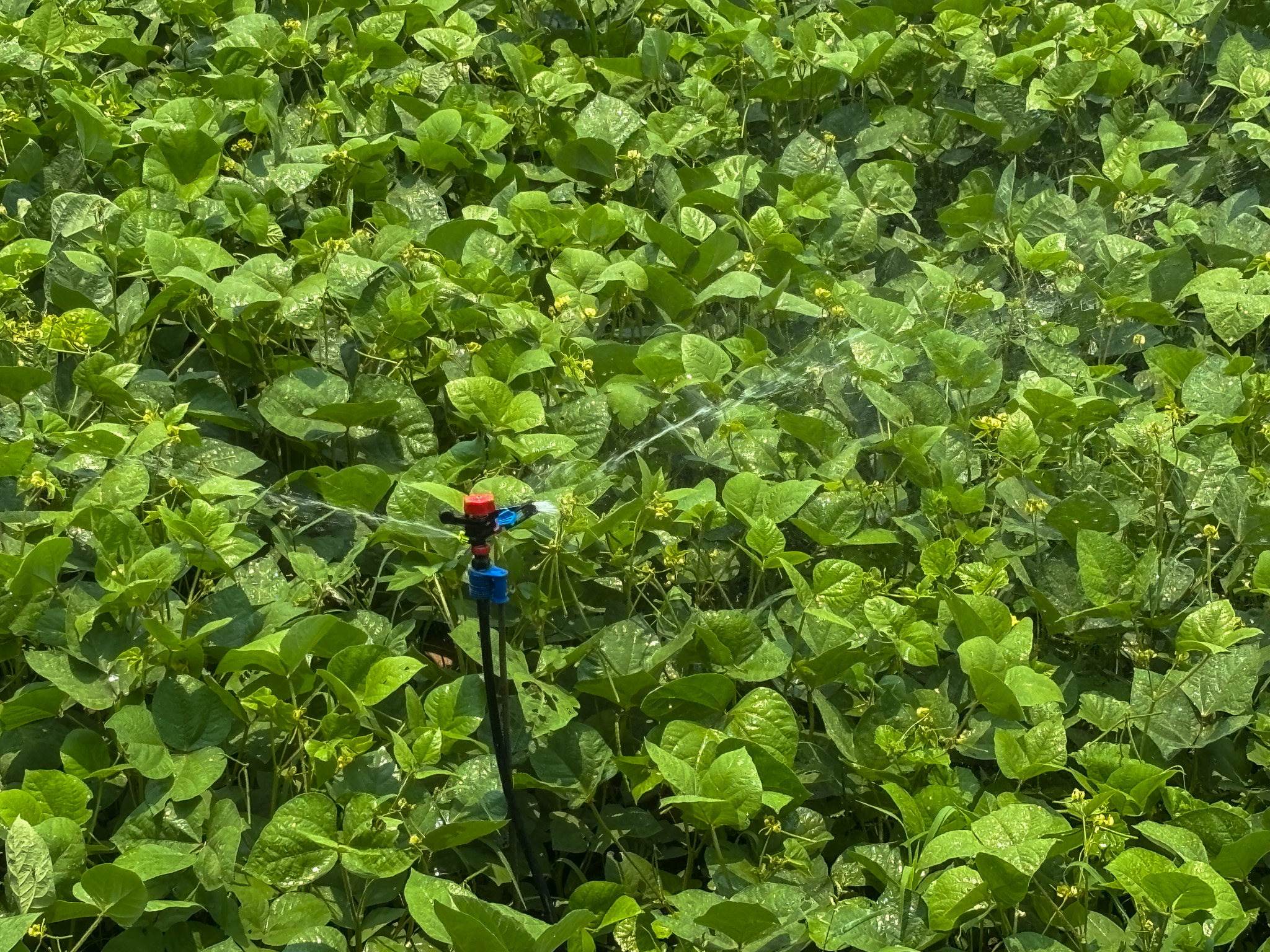
At an agrivoltaics site built by TCI in Bihar, solar power supports sustainable production through micro-irrigation. (Photo by TCI)
Reliable and decentralized electricity can also support cold storage, milling, food processing, cooling centers, charging infrastructure and other rural enterprises. These uses can reduce post-harvest losses, support diversification into higher-value crops, create local employment and stimulate demand for technical services and manufacturing. At the national level, greater renewable energy production can reduce dependence on imported fossil fuels and strengthen resilience to global energy market disruptions.
The key policy question is therefore not simply whether agrivoltaics should be part of PM-KUSUM 2.0, but how it should be designed and implemented.
What the current PM-KUSUM tells us
Component B of PM-KUSUM is particularly instructive because it directly involves farmers by supporting the solarization of diesel irrigation pumps and has reached more than 1 million farmers across the country.
Its implementation shows that national eligibility does not automatically translate into broad or geographically balanced participation. More than 85% of solar pumps installed under Component B are concentrated in five states—Haryana, Jharkhand, Maharashtra, Rajasthan, and Uttar Pradesh—and Maharashtra alone accounts for almost half of installed capacity. The installed-to-approved pump ratio also varies dramatically across states, from 0% in Telangana to almost 100% in Haryana. Several states where agriculture accounts for more than one-fifth of economic output, including Andhra Pradesh, Bihar and West Bengal, do not currently have implementing agencies for Component B.
These differences may reflect a combination of administrative capacity, state priorities, landholding structures, access to finance, irrigation systems, rural electrification and the ability of implementing agencies to identify and support eligible farmers. The broad lesson is clear: scheme design is only one part of inclusion; implementation capacity and institutional fit matter just as much.
The smallholder question
This lesson becomes even more important when agrivoltaics enters the equation. India has ambitious renewable energy targets, creating pressure to deploy capacity quickly. One way to do so is to prioritize large installations on sizable landholdings, where transaction costs are lower, financing is easier and megawatts can be added more rapidly. From a narrow capacity-addition perspective, this may appear efficient. But it also carries a significant distributional risk.
Agrivoltaic systems have high upfront costs. Small and medium farmers often face greater constraints in accessing formal credit, providing collateral and absorbing project-development risk. If program design also favors large landholdings and installations, the benefits could become concentrated among larger farmers and developers already positioned to invest.
A different pathway is possible. Smallholders can participate individually where feasible, but in many settings aggregation will be essential. Farmer producer organizations, cooperatives, self-help groups, water-user associations and other collective institutions can aggregate land, electricity demand, capital, risk and productive uses of energy. Such models can allow smallholder communities not merely to host solar infrastructure, but to retain a meaningful economic stake in the assets and activities they enable.
The Tata-Cornell Institute for Agriculture and Nutrition (TCI) has tested such a model in Bihar. The site was selected after assessing cropping patterns, group cohesion, irrigation availability and market access. Field data indicate that participating farmers increased their incomes while reducing irrigation water use and greenhouse gas emissions. The TCI model shows that smallholder agrivoltaics can be viable when project design reflects local conditions and farmers are directly involved in implementation and governance.
PM-KUSUM 2.0 should enable multiple pathways
There is unlikely to be a single agrivoltaic model suitable for all of India. Cropping systems, rainfall, groundwater availability, irrigation practices, market access, landholding patterns, solar resources and farmer institutions vary enormously across regions. A standardized national blueprint may simplify administration, but it could also constrain innovation and reduce local suitability.
PM-KUSUM 2.0 should instead create a framework in which multiple models can be tested and scaled: large and small, individual and collective, grid-connected and decentralized, and with different productive uses of electricity. Policy should define clear objectives and safeguards while leaving room for states, farmers, researchers and private-sector actors to adapt systems to local conditions.
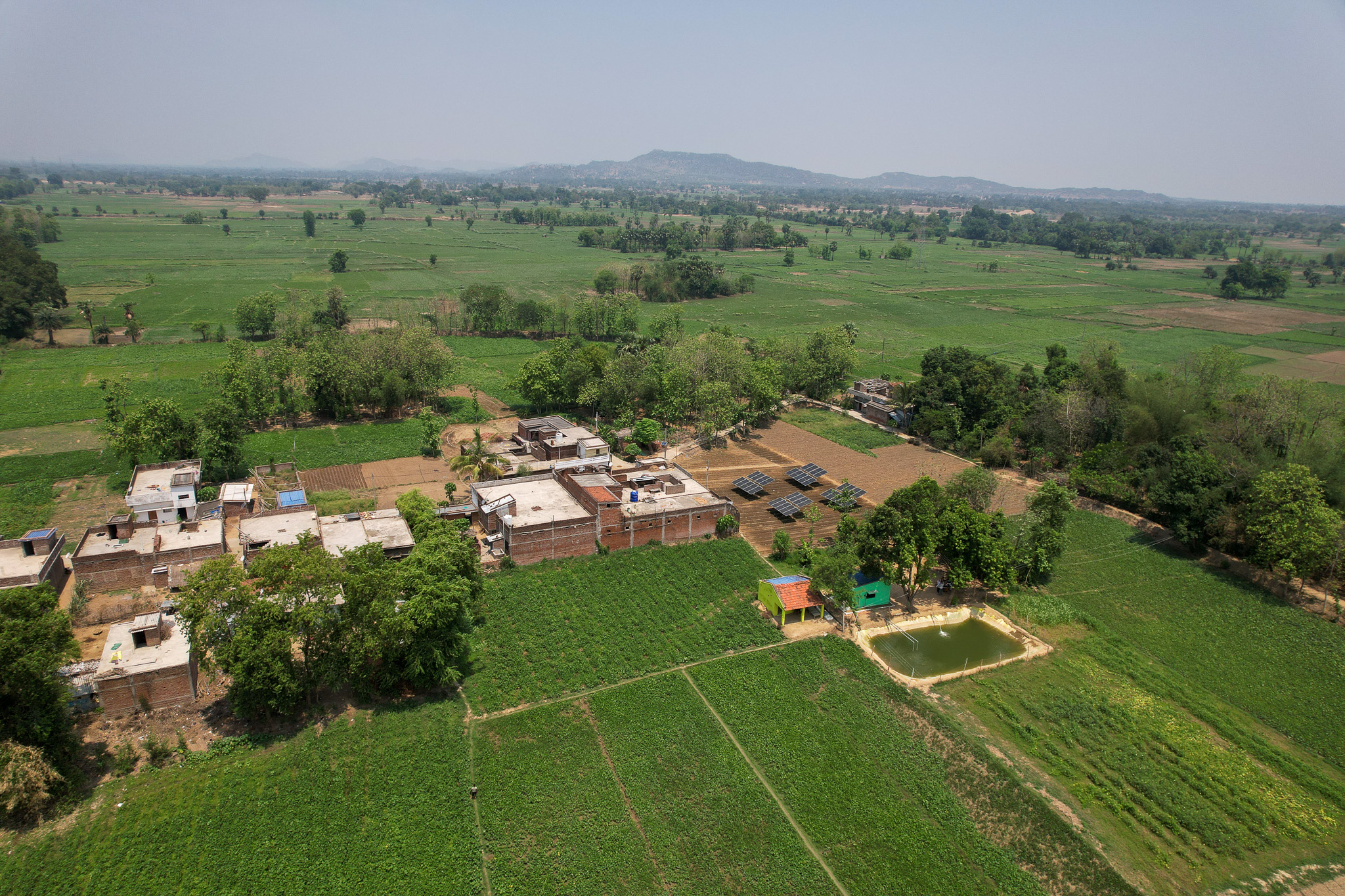
As part of TCI’s community-based agrivoltaics model, a small solar array supports a much larger (8-acre) footprint of enhanced crop production for six farms. (Photo by TCI)
The central choice is not simply between large and small installations. It is between treating agricultural land primarily as a location for generating renewable electricity and treating renewable energy as infrastructure for transforming rural economies.
If PM-KUSUM 2.0 follows the latter path, success should not be measured only in gigawatts installed. It should also be measured in farmers reached, income generated, water saved, crops diversified, rural enterprises created and communities given greater control over their productive and energy assets.
India’s farmers are entrepreneurial, adaptive and highly responsive to incentives. The role of policy is not to prescribe how they should use agrivoltaics, but to give them a genuine opportunity to participate in it. The real promise of PM-KUSUM 2.0 is not simply to put more solar panels on farms, but to ensure that the value created by those panels reaches the communities most often excluded from capital-intensive technological transitions. If that principle guides program design, agrivoltaics could become a platform for a more inclusive transformation of rural India.
Milorad Plavsic is the manager for strategic initiatives at TCI.
Harold van Es is a TCI faculty fellow and a professor of soil science in the Section of Soil and Crop Sciences at Cornell University.
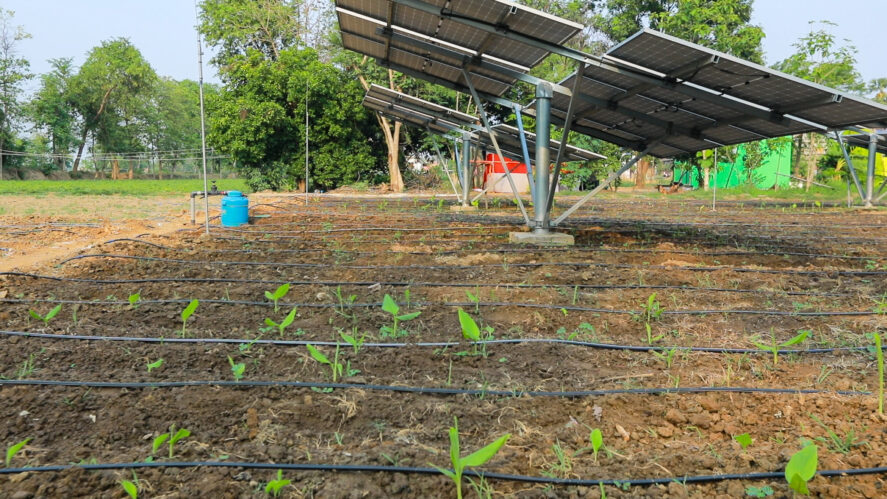
Featured image: At TCI’s model agrivoltaics site in Bihar, crops grow underneath an array of solar panels. (Photo by TCI)