
New Study Identifies India’s Agricultural ‘Hotspots’
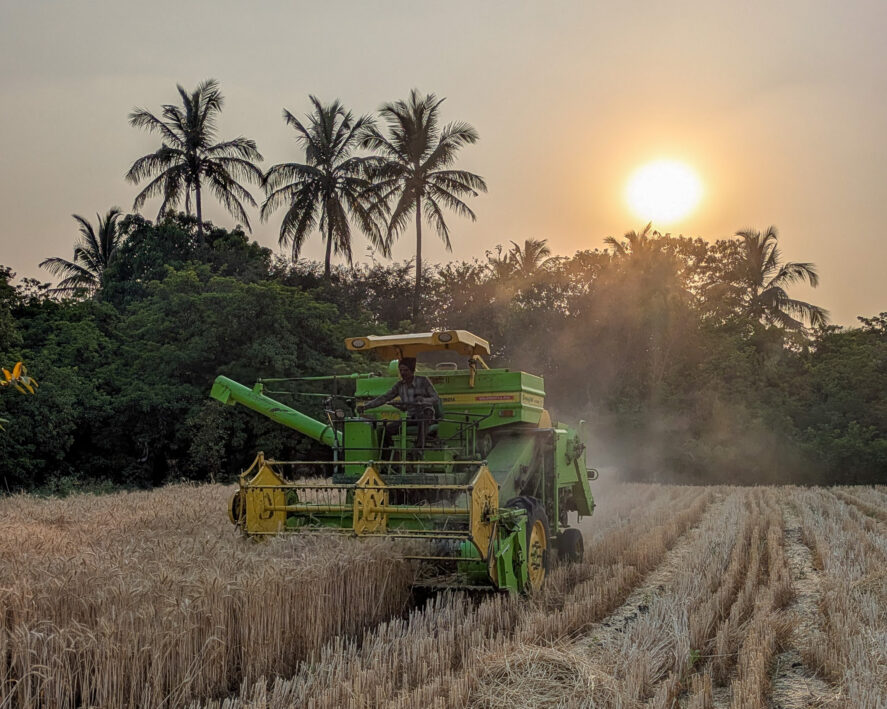
Amid India’s efforts to provide its growing populace with nutritious foods, increasing agricultural production is paramount. A new study by Tata-Cornell Institute for Agriculture and Nutrition (TCI) alumnus Chanchal Pramanik identifies India’s agricultural “hotspots,” districts with high crop yields. Lessons from those hotspots can potentially help increase production in low-yield areas.
In a paper published in the journal Agricultural and Resource Economics Review, Pramanik examined the spatial distribution of seasonal yields for paddy, wheat and millets in India from 2010 to 2019. Hotspots are defined as districts with seasonal crop yields ranked higher than the 80th percentile, or that achieved significant yield increases compared to the national average. Coldspot districts saw significant declines in yield. In all, Pramanik identified 536 hotspots and 122 coldspots.
Pramanik found hotspots for paddy clustered in Punjab, Haryana and Uttar Pradesh in the north; Telangana, Andhra Pradesh, Tamil Nadu and Karnataka in the south; and West Bengal in the east. Low-performing districts were located in central, western, eastern and northeastern states, such as Bihar and Assam. The average difference in yield between hotspots and coldspots varied depending on the season, from 0.77 tonnes per hectare in the summer to 2 tonnes per hectare during monsoon season.
For wheat, Pramanik found hotspots clustered in Punjab, Haryana and Uttar Pradesh in the north, and Madhya Pradesh, Rajasthan and Gujarat in central India. Coldspots were clustered in Maharashtra, West Bengal, and various southern and northeastern states. On average, hotspots produced 2.4 more tonnes of wheat per hectare than coldspots.
“It is evident from my research that districts endowed with favorable climatic conditions, supplemented by robust irrigation infrastructure, high fertilizer inputs and efficient access to agricultural information through Kisan Call Centers, are exceedingly represented among highly productive agricultural clusters,” Pramanik said.
Pramanik located hotspots for millets clustered in Haryana, Uttar Pradesh, Rajasthan and Madhya Pradesh in the north; Andhra Pradesh, Karnataka and Tamil Nadu in the south; and Gujarat in the west. Low-yield clusters, which were found in eastern India, Maharashtra and Karnataka, grew 1 tonne fewer millets per hectare than the hotspots.
The conversion of low-producing areas into agricultural hotspots can significantly improve farmers’ livelihoods. In the study, Pramanik used the poorly performing Darbhanga district in northern Bihar as an example. He said that increasing the district’s paddy and wheat production to match that of the hotspots could potentially increase household revenue by 148% for paddy and 79% for wheat.
To discern possible reasons behind the hotspots’ success, Pramanik analyzed the impact of input use—namely irrigation, fertilizer and extension advisories—on yield levels in the districts. He found that hotspots are associated with higher irrigation, higher fertilizer usage and increased use of digital extension services. A 1% increase in irrigation corresponded with a 7 kilogram per hectare increase in yield, while a 1% rise in crop specific extension queries was tied to a 6 kilogram per hectare increase. A 1 kilogram per hectare increase in fertilizer was associated with a 0.5 kilogram per hectare rise in yield.
Pramanik did not find rainfall to be a significant factor behind deviations in yield.
“It is evident from my research that districts endowed with favorable climatic conditions, supplemented by robust irrigation infrastructure, high fertilizer inputs and efficient access to agricultural information through Kisan Call Centers, are exceedingly represented among highly productive agricultural clusters,” Pramanik said. “The synergistic operation of these components holds substantial promise for enhancing India’s food grain production capabilities and overcoming regional climatic challenges.”
Pramanik cautioned that his analysis does not prove the direct causes of agricultural hotspots, saying that further research is needed to identify the specific drivers of high yields.
Featured image: Wheat is harvested from a field in Maharashtra, India. (Photo by Raghav Puri/TCI)