2025–26 in Review: Agriculture Transformation, Food Systems & Nutritional Transformation
This article presents a review of TCI research from the 2025–26 academic year related to agriculture transformation, food systems and nutritional transformation. For more TCI research, download the 2025–26 annual report.
Supporting Climate-Resilient and Nutrition-Sensitive Food Systems
The heavy dependence on paddy cultivation in India’s rice bowl state, Chhattisgarh, highlights several environmental and nutritional concerns. Reliance on a water-intensive crop like paddy contributes to groundwater depletion, methane emissions, soil health depletion, and susceptibility to climate shocks, especially in rainfed regions. A rice-heavy diet increases the risk of malnutrition and noncommunicable diseases, compared to traditional crops like millets and pulses, which are richer in iron, fiber, and protein.
To mitigate these interlinked environmental and nutritional challenges, TCI is assessing different pathways that can potentially facilitate the transition to a more diversified cropping system. In coordination with Professional Assistance for Development Action (PRADAN), TCI implemented a field trial to assess three climate-smart interventions: knowledge sharing, market support, and irrigation enhancement.
The first intervention pathway consisted of a series of workshops that provided farmers with information about climate change, including its origins, impacts, and broad mitigation efforts. Training on cultivation techniques and strategies for crops like paddy, millets, oilseeds, and pulses, with an emphasis on climate-resilient processes and scientific methods, was also provided.
The findings from this research can help to inform policies supporting a shift to a more nutrition-sensitive, climate-conscious food system.
The second intervention was designed to evaluate whether facilitating access to agricultural inputs and strengthening market linkages can support the adoption of non-paddy crops. Farmers received crop input kits containing seeds, organic manures, and crop medicines at a nominal cost. Further provisions for postharvest value addition were made through the installation of village-level pulse and oilseed processing units.
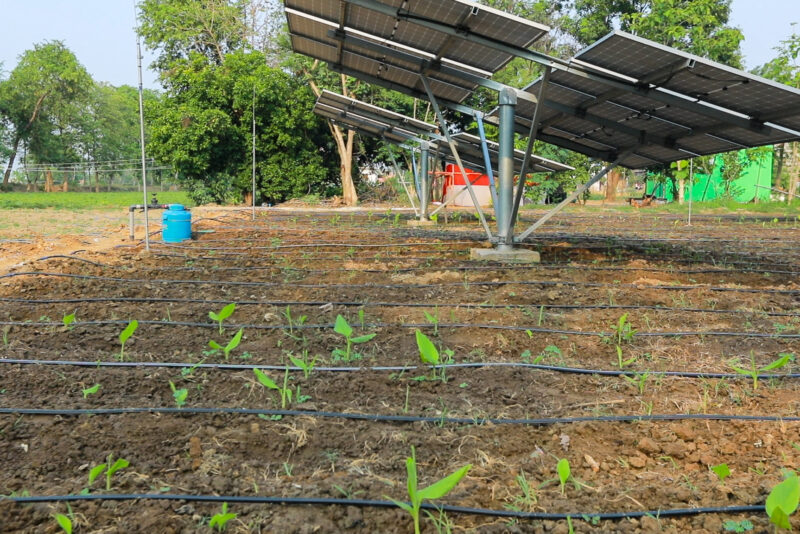
The third intervention was aimed at understanding whether improving irrigation access would enable farmers to diversify into alternative crops. TCI and PRADAN built solar lift irrigation infrastructure and farm ponds, in addition to establishing community-based water user groups.
TCI researchers are monitoring the impact of these interventions to gain actionable insights on transitions in the agricultural system. The findings from this research can help to inform policies supporting a shift to a more nutrition-sensitive, climate-conscious food system.
Fostering Sustainable Value Chains for Nutritious Foods
From the agricultural inputs shop, where the farmer decides what seeds, fertilizers, and pesticides to buy, to the consumers’ plate, which determines demand for different products, agricultural value chains shape how food is produced, processed, distributed, and consumed. They influence not only the efficiency and equity of market outcomes, but also the nutritional quality of diets, environmental sustainability of production systems, and the livelihoods of actors involved at each stage.
TCI’s latest project, “Promoting Value Chains for Climate Resilience and Nutritious Diets,” aims to examine the value chains for five major food groups in India: cereals, pulses, oilseeds, fruits, and vegetables. The main objective of this project is to promote efficient value chains that are economically viable, environmentally sustainable, and nutrition-sensitive. By identifying key bottlenecks, trade-offs, and opportunities across different stages of the value chain, TCI seeks to inform policies and interventions that can enhance value addition, reduce losses, improve market linkages, and support the production and consumption of diverse, nutritious foods.
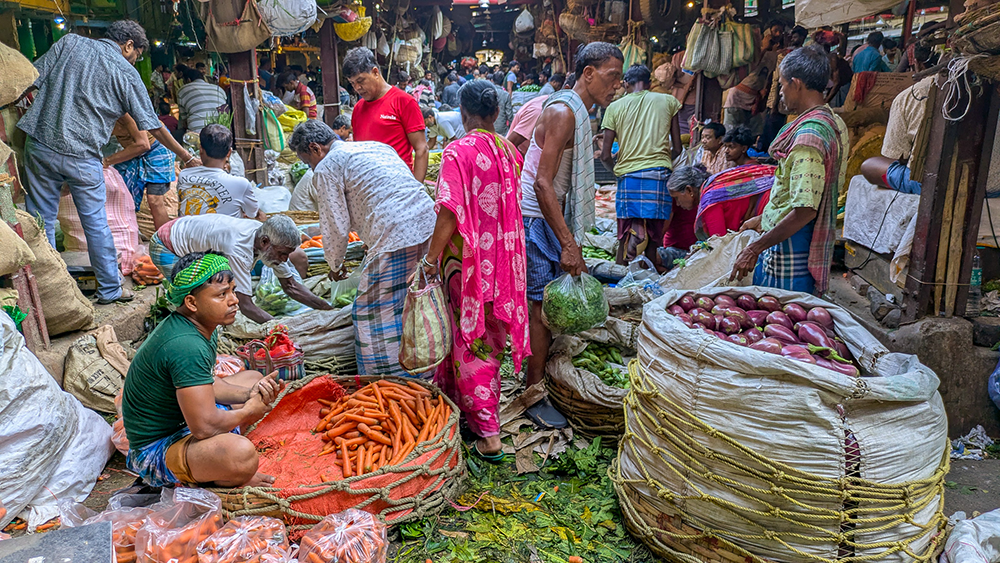
Markets are just one stop along the value chain, which brings crops from the farm to consumers. (Photo by Raghav Puri/TCI)
In the first stage of the project, researchers mapped trends in the production, consumption, and trade of crops across these five major food groups, situating them within broader structural shifts in India’s food system. The researchers also synthesized the existing literature to assess the value chains of the most widely produced crops, with a focus on their economic, environmental, and nutritional performance.
Building on these insights, in the second stage of the project, TCI identified one relatively understudied crop from each food group for in-depth, context-specific qualitative analysis. In spring 2026, researchers completed primary data collection across five diverse locations in India—each representing a distinct value chain: maize in Purnea, Bihar; black gram in Chhatarpur, Madhya Pradesh; soybean in Latur, Maharashtra; orange in Nagpur, Maharashtra; and eggplant in Nadia, West Bengal. These case studies traced the functioning of value chains from input provision and production practices to aggregation, processing, and retail, capturing the perspectives of farmers, traders, and other value chain actors.
By combining these grounded insights with broader value chain assessments, the project aims to identify bottlenecks, coordination failures, and points of value loss that shape outcomes for producers and consumers alike. The findings will generate actionable evidence on where and how interventions can improve efficiency, enhance resilience, and support a transition toward more sustainable and nutrition-sensitive food systems.
Cash Transfers Reshape Rural Work
In India, national and state-level safety net programs provide assistance to impoverished households through cash transfers. Development economists have long asked whether cash transfers cause people to work less, with studies from India and a range of other countries showing no effect. However, an equally important question has gone largely unanswered: does it matter who in the household receives the money? In rural India, women often shoulder the most physically demanding and least remunerative work, relying on public employment programs as a last resort. Cash transfers to women could empower them to choose how much work they do and what jobs they are willing to accept.
TCI Scholar Kasim Saiyyad is addressing this issue by studying how the provision of cash transfers to different gendered members of households affects their decisions around work and other household issues. In a study of 800 households in Maharashtra, Saiyyad compared the impact of two male-targeted cash transfer programs, the PM–KISAN and the NaMo Shetkari Mahasanman Nidhi Yojana, with that of the Ladki Bahin Yojana, which provides cash to eligible women. Saiyyad’s research encompassed three rounds of surveys, in addition to administrative records from the Mahatma Gandhi National Rural Employment Guarantee Scheme (MGNREGS), which provides public employment to impoverished men and women.
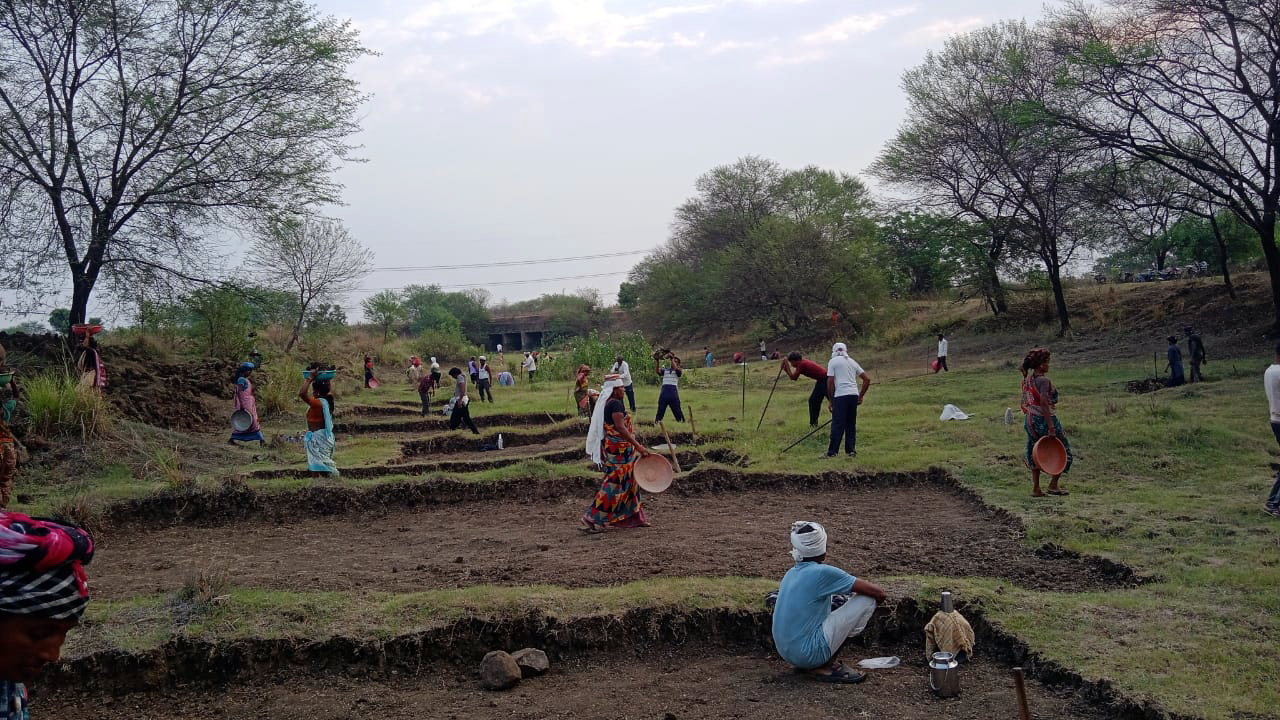
Laborers work on an MGNREGS project in Maharashtra, India. (Photo by Kasim Saiyyad/TCI)
Saiyyad found that when cash is given to men, there is no change in employment. Both men and women in the study continued pursuing work through the MGNREGS. However, when money was given to women, MGNREGS work days for women fell. The decline was concentrated in the period from July to October, when private farmwork is plentiful, indicating that women were not quitting work; they were stepping back from safety-net jobs that they no longer needed.
In addition to employment decisions, Saiyyad’s research also explores what else changes when cash transfers are directed toward women, such as dietary diversity, household migration decisions, and the intrahousehold balance of financial autonomy. This research holds the potential to show how cash transfers, long judged neutral on whether people work, may quietly reshape rural lives in different ways, depending on which member of the household receives the money.
Promoting Crop Diversification
Crop diversification, or cropping system redesign, is widely promoted as a pathway to improve farmer incomes, strengthen resilience to climate change, increase access to nutritious foods, and provide ecosystem services. However, attempts to promote diversification often have limited success and can also lead to unintended consequences.
TCI Scholar Kiera Crowley is conducting research in Bihar, India, to better understand the drivers and consequences of cropping system transitions. Using survey data and interviews with farmers, Crowley’s research focuses on three issues: the relationship between cropping patterns and socioeconomic factors, how farmer perceptions of field water characteristics influence diversification, and the implications of diversification on groundwater in Bihar.
Crowley interviewed 80 farmers and other agricultural stakeholders about the winter-season transition from wheat to maize in eastern Bihar, using National Sample Survey data to characterize cropping patterns in the state. Quantitative analysis suggests that cropping patterns are shaped more by district-scale factors than by household-level characteristics, while the interviews reveal that market and biophysical factors created a strong enabling environment for maize uptake. However, adoption also depends on the availability and affordability of irrigation and labor, in addition to access to market infrastructure.
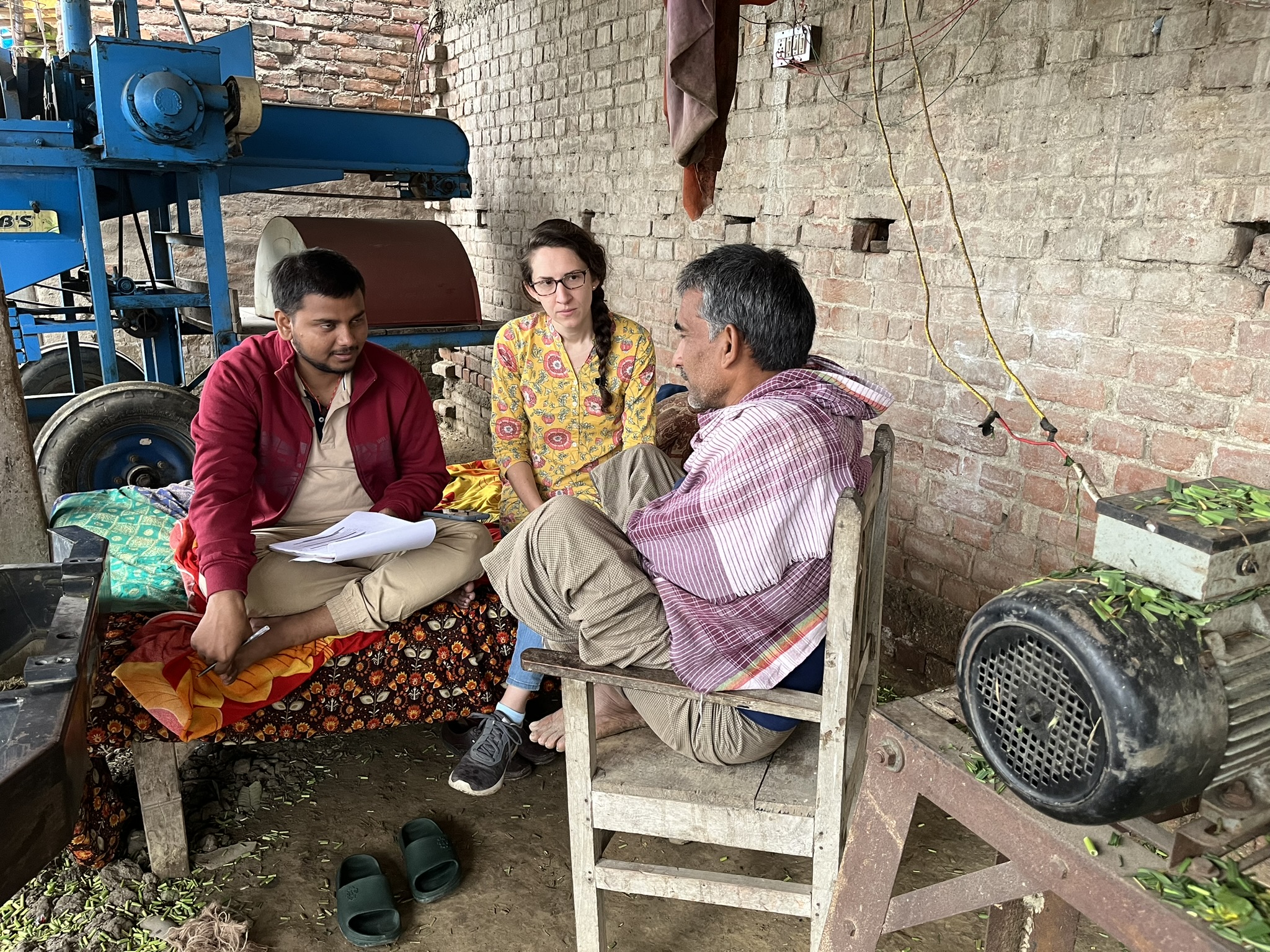
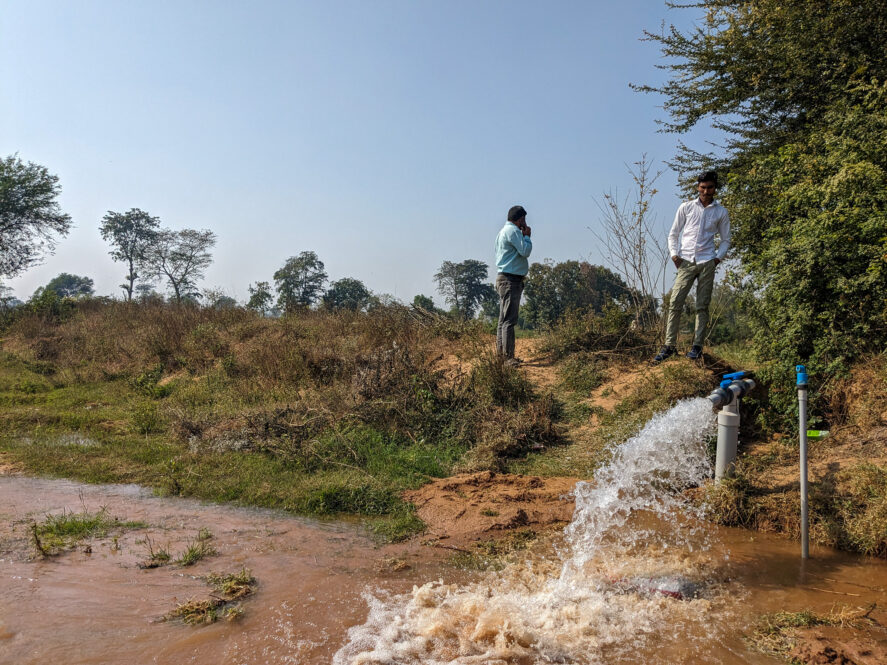
Kiera Crowley interviewed dozens of farmers during her field-based research in Bihar. (Photo provided by Kiera Crowley)
Additional interviews with 96 farmers documented perceptions of waterlogging in individual fields and how those perceptions influence crop choice. Preliminary results suggest that farmers with similar waterlogging conditions often make different crop choices, indicating unrealized potential for diversification in some rice-dominant areas. However, socioeconomic constraints continue to limit many farmers’ willingness to diversify.
Crowley used crop modeling and crop area statistics to estimate the water consumption of winter maize systems and compare future groundwater demand under different maize expansion scenarios. Her results suggest that maize uses substantially more water than wheat and that continued rapid expansion could push groundwater extraction beyond officially defined “safe” levels.
Given the importance of crop diversification to food system reforms aimed at promoting climate resiliency and improving nutrition outcomes, Crowley’s research offers essential insights into how and why farmers decide to diversify, as well as the potential environmental impact of changing cropping patterns.
Featured image: TCI and PRADAN built solar-powered lift irrigation systems for farmers in Chhattisgarh to
promote crop diversification. (Photo by TCI)